Tuesday, March 25th, 2014

Interview with Keith Goddard at Books Matter

LT members who’ve been around for a year or so may remember our partnership with Books Matter, an organization dedicated to providing books to needy schools in Ghana. I caught up with Keith Goddard—founder of Books Matter—this week, who was kind enough to update me on their latest projects!

Interested in donating to Books Matter? Drop me a line at loranne@librarything.com to donate books, or visit their website for monetary donations.

Can you tell us a bit about how Books Matter got started?

Basically, three things happened. First, my wife was sending some items to Ghana (that’s where she’s from) and she suggested we send some books and other things that my kids no longer used. The second thing is that she had always told me that many school in Ghana have no books. That really shocked and amazed me. The third thing is that I am a teacher in the Toronto public school system and I noticed that a lot of books are lying around in schools and not being used. So, I gathered up about 800 books and that was the start.

What is the process involved in getting a shipment of books sent? How many books can you send to Ghana at once?

We don’t have a lot of room at our house, which is where we store the books. Once we get to about 2,000 books our sunroom becomes unusable, so we are encourged to clear them out. Then we have to scan them, pack them, and raise enough money to send them. There’s no limit on how many we can send at a time, but due to the storage issue, we think around 2,000 is a good number.

In its first year, Books Matter sent 6,000 books to Ghana. That’s great! Did you anticipate that you’d have this much success?

I didn’t really know what to expect. Sometimes I think 6,000 is great and other days I feel that it’s nothing. I wish we could help meore people, but that being said, I know that the people we have helped are appreciative.

How many schools/libraries have received books from Books Matter now, and where are they? (Click map to enlarge)

So far, five institutions have received books from us: Bright Future School, in Keta; a library in Keta; a college in Ho; an elementary/junior high near Ho; and, an orphanage near Kumasi.

You recently ran an Indiegogo campaign, and set out to get another 2,000 books sent. Have those reached their destination(s)? Will you be running another Indiegogo campaign any time soon?

We ran an Indiegogo campaign just before the New Year, and with that money we shipped 1,700 books to five schools, two of which have separate buildings for the junior high and elementary schools, but on the same land. So, those books were cataloged into separate libraries. So, it’s five schools, but seven libraries. I hope that makes sense. Those books should arrive in late April. Since then we’ve received more books and would like to send about 1,500 in April. We’ve packed about 1,000 and scanned about 700. We scan the books we send to most of our recipients, but not all. Probably over 80%.

What are some of your and/or the students’ favorite books that Books Matter has sent?

We’ve sent some great books so far, but I hope we can get more book donations, from publishers, once we are an official charity. One thing that is difficult to do, but that I want to do, is get more feedback from the students about the books and their reading
habits, and how those habits are (hopefully) changing. I’d probably have to check some of the catalogs on LT to remember what we’ve sent! Good thing I cataloged them. We’ve sent a lot of great science and non-fiction picture books, fact books, and there are very few books like that in most Ghana schools. I think those will have a big impact on a lot of younger kids, even if they are reluctant readers, because the topics are so diverse and often relevant. We also sent a first edition And to Think That I Saw It on Mulberry Street… lots of Dr. Seuss. It would be wonderful if any LT members thought there were certain must-have books for youngsters, that they wanted to donate, and maybe write a litte note in the front; they would just have to ship it to us in Toronto.(1)

What’s your personal library like? What sorts of books can be found on your shelves?

My personal library is really nothing to talk about… a fair number of biographies/memoirs about people in developing countries overcoming extreme adversity. Lots of non-fiction.

What have you read and enjoyed lately?

I like having about five books on the go at once, partly because I have trouble sticking with things sometimes! Also, because I enjoy such a wide variety and that’s the big reason I think kids should have a lot of books at their disposal to check out and become interested by. Having an e-reader is great, but that’s different than browsing through shelves of books, and touching them and flipping through them. That’s how kids catch the reading spark. That, and being read to. I just finished 12 Years a Slave and am now reading a modern day slavery account, called Slave by Mende Nazer and Damien Lewis. I’m also reading a book on how to use YouTube for marketing.

What’s next for Books Matter? Do you have the next milestone, upcoming projects/shipments, etc. in mind?

We’ve always got shipments in mind. We’d like to hear from some of the schools where we’ve donated and make subsequent donations based on their likes and needs. I would love to go back to Ghana sometime in the future and oberve the kids, talk to them about reading, read with them, and talk to the teachers about reading/teaching strategies. It would be great to give more support than just putting the books in front of people. That’s not always enough, especially if they haven’t already developed the reading bug. That’s why sending the picture books and easy readers for the very young children is so important.

I’d like to thank Keith for taking the time to chat with me! Books Matter is doing excellent work, and it’s a joy to work with them!

—interview by Loranne Nasir


1. As mentioned above, if you have books you’d like to send to Books Matter, be sure to send Loranne an email (loranne@librarything.com).

Labels: books for ghana, gifts, member projects

Friday, April 26th, 2013

Books for Ghana: LibraryThing teams up with Books Matter!

Between November and April, LibraryThing members raised nearly $2,600 for needy readers by adding events to LibraryThing Local!

When we announced this initiative we asked for your help in coming up with the best way to use this money to put books directly into the hands of readers who would benefit the most from them. We wanted to find a project where our contributions can really make an immediate, tangible difference, and one with which LibraryThing and its members can build an active and ongoing relationship.

We’re very pleased to announce that we’ve found just such a project!

Books to Ghana

In February we donated donated $600 of the funds raised to Keith Goddard’s Books4Ghana campaign on IndieGogo, enough to put that effort over the top. Keith, who’s been a public school teacher in Toronto for the past fifteen years and has family connections in Ghana, began collecting books last summer for the Bright Future School in Keta, Ghana, a K-9 school with 600 students and thirty faculty members.

The first batch of 200 math textbooks and 500 children’s books were sent in August 2012, and arrived in October. Another 3,100 books Keith collected from schools around Toronto (and stored in his house!) were shipped this February after the successful IndieGoGo campaign, and arrived just a couple weeks ago. They will be delivered to the school later this month. You can browse the catalog of these books at http://www.librarything.com/profile/booksmatter. As the project expands and books arrive at additional libraries, we’ll be separating these out into separate LT catalogs for each library, so that they can be optimized to fit the specific needs of each school (and so that they can be updated as needed, of course).
Keith has now launched a new website for the Books Matter project at http://www.booksmatter.org, and is in the process of registering as an official charity. He’s currently rounding up the next batch of books to ship over to Ghana, and identifying the schools there that will benefit most from books we send.
Phase One: How to help now

Right now the major need is funding for shipping already-donated books to Ghana: payment for a shipping container, sea transport to Accra, Ghana, and then transportation from Accra to the schools in the Volta region). It costs approximately $1 per book to pay for shipping (as Keith says, “$10 sends 10 books, $50 sends 50 books: the math is simple, but the effect is profound”).

We’re going to be giving more of the money members raised by adding events to LT Local for this, and we invite you, should you feel so inclined, to head over to Books Matter and donate directly to the cause as well. If you donate, make sure to mention you’re a LibraryThing member!

Phase Two: Collection Development

This is about more than money. Books Matter is cataloging everything they send to Ghana.

Having everything cataloged allows us to do more than send random books. We can get involved in collection development—sending the right books to the right schools to fill gaps or to focus on areas of interest. We can do this site-wide or in groups. So, for example, wouldn’t it be cool if the “Green Dragon” and “Science!” groups could collaborate to make sure they’ve got a good collection in their area? And teachers and children at the schools can also participate, telling us what they need and how we can help!

That’s our idea. We’ll support it with some money and with features. But members will have to drive it. Let’s see what we can all do for readers in another country.

Come talk about phase two here: http://www.librarything.com/topic/153515

Why we’re doing this.

We’ve wanted to do something like this for a long time. We feel it’s important to give back when we can, and we want to give our members an easy way to contribute to a worthy project that puts books in the hands of readers who need them. By working with Keith and Books Matter, we’re in on the ground floor of a new, exciting project with lots of growth potential, and will be able to work with him to make sure that our contributions get where they need to go.

We’re really delighted about this, and we hope you all will be too!

Labels: events, fun, gifts, librarything local

Tuesday, December 9th, 2025

Top Five Books of 2025

 
2025 is almost over, and that means it’s time for LibraryThing staff to share our Top Five Books of the Year. You can see past years’ lists HERE.

We’re always interested in what our members are reading and enjoying, so we invite you to add your favorite books read in 2025 to our December List of the Month, and to join the discussion over in Talk.

>> List: Top Five Books of 2025

Note: This is about what you read in 2025, not just books published in 2025.

Without further ado, here are our staff favorites!


Abby

The King of Infinite Space by Lyndsay Faye. A queer retelling of Hamlet set in the New York City theater world. It’s lyrical and magical and stunning.

Woodworking by Emily St. James. Woodworking is a coming of age story with two trans heroines, a teenager and a high school teacher. It’s wry and sharp and FUNNY and messy and fantastic.

Mutual Interest by Olivia Wolfgang-Smith. Historical fiction set in New York at the turn of the 20th century, Mutual Interest is a novel about ambition, power, and queer lives. I couldn’t put it down. (Her 2023 Glassworks was in my top 5 that year. Go read Olivia Wolfgang-Smith!)

Home of the American Circus by Allison Larkin. I only finished this book a few days ago and it quickly made the list. Home of the American Circus is a character driven novel about a woman and her niece, small towns, messy hopeful humans, and dysfunctional families.

Bury Our Bones in the Midnight Soil by V.E. Schwab. Toxic lesbian vampires!

Honorable mentions go to: Katabasis by R.F. Kuang, Heart the Lover by Lily King, and All the Water in the World by Eiren Caffall.

Tim

The Scaling Era: An Oral History of AI, 2019–2025 by Dwarkesh Patel. Stitched together from his podcast, it is indeed a sort of oral history of the last few years in technology—the most consequential since the late 90s, or even early 80s.

Ghost on the Throne: The Death of Alexander the Great and the War for Crown and Empire by James Romm. Romm manages to stitch together quite a yarn from the shipwreck of early Hellenistic history.

The Nineties: A Book by Chuck Klosterman. Hilarious and insightful. I’m still reading it, because I only listen to it in the car with my wife.

The Library of Ancient Wisdom: Mesopotamia and the Making of the Modern World by Selina Wisnom. Notionally about Ashurbanipal’s famous, extensive library, it doubles as a wide-ranging exploration of Mesopotamian history and culture. Parts were slow going, others electrifying. It made me want to learn Assyrian but NO MORE LANGUAGES TIM!

The History of the Church: From Christ to Constantine by Eusebius. I had never read Eusebius straight through. It’s fascinating stuff, both for the slim shafts of light it throws on the first century or so of Christianity history, and for its unique contribution to historical method. It’s a crying shame we lost Heggesippus, Pappias, Dionysius of Corinth, etc.

Honorable mention goes to: Abundance by Ezra Klein and Derek Thompson. The only way out. Klein is better at diagnosing the problem than suggesting solutions, but that’s the part that matters most.

Kate

Wild Dark Shore by Charlotte McConaghy. I recommended this book to practically everyone this year – not that I needed to as this book was being hyped everywhere. The writing is lush, the setting captivating, the characters fully formed. Months after finishing this story, I was still thinking about them. I still am. What a beautiful, terrifying, heartbreaking novel.

Nightwatching by Tracy Sierra. A home invasion story is not something I ever would’ve picked up on my own, but it came highly recommended by Olivia Muenter, and so on the first day of 2025 I sat down and read this (almost) straight through. Nightwatching caused me to feel equal parts fear and anger: fear for this woman and her children trying to survive the unthinkable, and anger towards all of the people (as depicted in this book… and in life) who don’t trust women.

All the Colors of the Dark by Chris Whitaker. Ok, this book is a bit overwrought, but I enjoyed it! Give me a hefty book with well-written characters and a bit of mystery, and I’m a happy reader.

My Name Is Lucy Barton by Elizabeth Strout. I’m so glad that I finally read this book. It was quiet, yet thrilling. I look forward to reading everything that Strout has published.

Tilt by Emma Pattee. The book ostensibly takes place in one day – the day a major earthquake hits the northwest US – and brings us along the protagonist’s journeys after the quake in search of her husband. And while the book is the story of one day’s journey, it’s also a meditation on the choices we make and the events that affect us most in life. The protagonist’s ongoing conversations with her soon-to-be-born baby illustrate her life and loss, her heartbreak and her hope. I ate it up and loved it so.

Lucy

The Travelling Cat Chronicles by Hiro Arikawa, translated by Phillip Gabriel. This book was beautiful and bittersweet. I enjoyed the voice of the cat! He was funny and insightful. A lovely book all around.

Dungeon Crawler Carl by Matt Dinniman. LitRPG! A genre I didn’t realize existed! This book was a lot of fun to read for someone who’s played a lot of video games. I also love Princess Donut; she’s a riot.

The Toll by Neal Shusterman. Usually in three-part young adult series like this, I find that the first one is the best and the other two are lackluster at best. I was pleasantly surprised with how much I enjoyed this last book of the series! I read the whole trilogy in 6 days while I had COVID; I just couldn’t stop reading!

Tooth and Claw by Jo Walton. This was such a charming book! I was immediately invested in the characters and needed to know what would happen to them. The dragon lore was also very interesting, making it a little darker than it would have been had the story been about humans. I had hoped Walton had written more books like this, but apparently not. The world was so interesting!

The Nineties: A Book by Chuck Klosterman. This book was super interesting. I’m obsessed with the nineties (when I was 6-16), and this book provided the ability to relive the things I remember.

Honorable mentions go to: Futuristic Violence and Fancy Suits by David Wong and Flatterland by Ian Stewart.

Kristi

Iron Flame by Rebecca Yarros. I didn’t realize I could enjoy a fantasy romance series as much as I have with The Empyrean, but apparently I enjoy my books like I enjoy my food: a little spicy. Yarros has excellent pacing and character development; I’m totally invested in the riders and in the bond between Violet and Xaden. I’m able to totally escape as I read, which is exactly what I’m looking for in a fantasy book. And the twist at the end? Give me book 3 now, please. (Read book 3: give me book 4, now.)

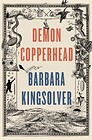
Demon Copperhead by Barbara Kingsolver. I found the theme of redemption in this novel perhaps a lot more than some of the nay-sayers of this tale retold. To the overlooked, the forgotten, the invisible, the ‘trash’, the trashed, the small-town ‘less-thans’: this story will make you feel seen. To anyone who can’t relate to a story like this: read it. Period.

A Deadly Education by Naomi Novik. While I was a bit disappointed with the rest of the series, the first in the Scholomance is a good one. I found myself chuckling often at the bristly, sarcastic protagonist throughout. Add magic and a bit of thrill and violence? Sign me up.

Emily Wilde’s Encyclopaedia of Faeries by Heather Fawcett. This cozy romantasy* tale made me fall in love with Emily Wilde, who seems to definitely have some neurodivergent behaviors and was written by someone who understands them. I’ll be reading more of this series, that’s for sure!

*I did not have “started reading romantasy” on my 2025 board, but I’m enjoying the ride.

ADHD is Awesome: A Guide to (Mostly) Thriving with ADHD by Penn Holderness and Kim Holderness. I was pleasantly surprised at how helpful this book was in understanding ADHD and, more importantly, how to learn to thrive with it. I’ll most likely be purchasing a hard copy to keep and revisit whenever I need to!

Abigail

A Proud Taste for Scarlet and Miniver by E.L. Konigsburg. Eleanor of Aquitaine, Bishop Suger, Empress Matilda and William the Marshall wait in Heaven for King Henry II to ascend after many years below, in this immensely engaging work of historical fiction for young people. The framing device here was fascinating, allowing for a certain amount of commentary and introspection that might not otherwise have been possible. The story itself, the narrative of Eleanor’s life, was also fascinating, and I thought Konigsburg did an excellent job writing from the different perspectives of her four storytellers. Suger’s beauty and spirit-focused account is very different from Empress Matilda’s tart (but fair) take on her daughter-in-law. Well worth the time of any young reader who enjoys historical fiction, or who is fascinated by Medieval Europe and/or Eleanor of Aquitaine.

Can We Save the Tiger? by Martin Jenkins, illustrated by Vicki White. A gorgeous, thoughtful picture book about endangered species from British children’s author and conservationist Martin Jenkins and former zookeeper and natural history illustrator Vicki White. The artwork, created using pencil and oil paint, is stunningly beautiful, and both black and white and color illustrations demand attention, and will have young readers poring over them. The informative but conversational tone taken by Jenkins in the text, and the balance shown in his narration, between the destruction wrought by humans on the natural world, and the attention demanded (and deserved) by human need, was striking. Too often in books on conservation, there is a tendency to demonize humans, and to treat every wrong decision made, in the past or the current day, as arising from either stupidity or intentional malice. It was refreshing to see this strategy (and error, in my opinion) avoided, and to see that one of the fundamental stumbling blocks to animal conservation—the competition between animal and human need—is accurately and compassionately described. Likewise, it was heartening to see that while attention was paid to the tragedy of past extinctions and the danger of possible future ones, success stories were also included, and room was left open for hope. This kind of balance is vanishingly rare in children’s books of this kind. Rather than simplifying and dumbing things down, the narrative here preserves complexity, treating children as intelligent beings capable of wrestling with that complexity.

The Troll With No Heart in His Body and Other Tales of Trolls from Norway by Lise Lunge-Larsen, illustrated by Betsy Bowen. Nine troll stories from traditional Norwegian folklore are retold in this gorgeous collection from author Lise Lunge-Larson and illustrator Betsy Bowen. This marvelous, marvelous book has everything I look for in a folktale collection: fascinating stories that entertain and enthrall, a storyteller who documents source material and specifies how she had modified each tale, a thoughtful introduction situating the tales in their cultural milieu, and gorgeous artwork. I was familiar with a number of these tales, and have run across a number of picture book retellings of both The Three Billy Goats Gruff and The White Cat in the Dovre Mountains, but other stories were either unfamiliar, or only partially familiar, with elements I knew but others I didn’t. However that may be, I enjoyed all of them, I enjoyed the supplemental discussion of them, and I enjoyed the accompanying woodcut illustrations.

I Talk Like a River by Jordan Scott, illustrated by Sydney Smith. Beautifully written and beautifully illustrated, this is a picture book gem! It addresses a subject—namely, stuttering—in a sensitive, emotionally resonant and ultimately thought-provoking way. The central idea of the book—the boy narrator coming to identify his manner of speaking with the sound of a river’s waters, after his father makes that comparison—is one taken from poet Jordan Scott’s own childhood, and offers a thoughtful way to look at the issue of speech, and how this young boy makes sounds. The text here is simple, but it communicates volumes, not just about the boy’s experiences, but about how the world around him treats him because of his differences. There were moments when I was close to weeping, particularly when the boy described how he remembers the fact that he talks like a river in order to keep himself from crying, or from remaining silent.

The visuals here are beautiful, often breathtakingly so, but they are also marvelously well designed, helping to communicate and intensify what is happening in the text. In one two-page spread at the beginning, when the boy is just waking up and sounds are first intruding upon him, there are three images in a horizontal arrangement across the pages, broken up by text, as if to indicate the sense of a series of sounds and experiences in quick succession. Later in the book, when the boy’s father has suggested that his speech is akin to the sound of the river, a two-page spread depicting him with his eyes closed, listening intently, then opens up into a gorgeous four-page spread, full of light and wonder, in which the boy is wading in the waters of that river. These illustrative choices are simply brilliant, working with the text to communicate deeper meaning and emotional experience. This, the synergy between text and image, is the hallmark of a great picture book, and makes this a truly special read.

The Swallow: A Ghost Story by Charis Cotter. Set in Toronto in 1963, this atmospheric, engrossing and ultimately poignant middle-grade novel explores the friendship between two young girls, as they struggle to understand and contend with the ghosts around them. I found it immensely entertaining and ultimately very moving. Charis Cotter knows how to spin a tale, and how to create an intense and spooky atmosphere, evoking a truly eerie feeling in the reader. The emotional trajectory of the tale, and of the two characters, was sensitively depicted, and I felt great sympathy for both. The reveal toward the end of the book was a powerful one, for all that I saw it coming. I pretty much loved everything about this book, from the beautiful cover art to the dual-perspective narrative. I even loved the fact that the folk song, She’s Like the Sparrow was worked into the tale, as this is one of my favorite songs of all time. An absolutely gorgeous rendition, done by the Irish singer Karan Casey, can be found on Youtube, HERE.

Honorable mentions go to: The Diddakoi and Mr. McFadden’s Hallowe’en by Rumer Godden (always a favorite of mine), Nana Upstairs & Nana Downstairs by Tomie dePaola (the second year in a row dePaola has made my honorable mentions), and Little Red Riding Hood by Trina Schart Hyman.

Zeph

Lavinia by Ursula K. Le Guin. Le Guin enchants you immediately, as Lavinia’s own voice and stories glow with an existential nostalgia that you have no right feeling for pre-Roman Latium. Lavinia’s story, previously unsung, is human and mystical in turns, mixing heartache and family matters with ancient ritual and poetic necromancy. Le Guin weaves history into the story with skill; although the Roman abstraction of divinity is probably too early for Lavinia’s timeline, she still pulls us directly and beautifully into her ancient world. If you liked Circe, you’ll love this.

Our Share of Night by Mariana Enríquez, translated by Megan McDowell. There’s a heaviness in this book that, while indeed long, is more about the horrors humans inflict upon each other, especially for greed. Cruelty and trauma are side by side in each chapter. I started it full of curiosity but that feeling quickly built into a gross miasma as I read. Folk magic and disturbed secret societies gather around power where they can find it and get rid of anyone necessary along the way. If you like the dark, you’ll enjoy the humanity in the book as well. If you don’t, I don’t recommend it.

Our Evenings by Allan Hollinghurst. There’s a closeness in watching a kid grow up over the course of a book, but I didn’t have to get far into it to start caring for this character. What struck me most wasn’t the plot or characters, but the way Hollinghurst draws out those thoughts between thoughts, those feelings you can’t name; a perspective hard to find outside of poetry or maybe Virginia Woolf. I felt I was in the midst of a classic but found few met-expectations or tropes along the way. This was my introduction to the wonderful Hollinghurst, and I can’t wait for more.

True to the Earth: Pagan Political Theology by Kadmus. I think this book has implications beyond any special-interest niches. It contrasts our current widespread worldview of substance-based ontology and literate monotheism against high pagan/oral society’s event-based ontology. Kadmus explores the implications of this comparison on our experiences, relationship to religion, and politics. Anyone interested in pre-Platonic religion will obviously enjoy this, same with any philosophy heads, but I’d recommend True to the Earth for any reader who wants to try to see the world in a new way.

Lolly Willowes, or The Loving Huntsman by Sylvia Townsend Warner. Can’t believe I didn’t stumble upon this treasure earlier in my life. So much of what I love about cozy characters and comedies of manners is present in the first acts. It feels like the origin of many widely-beloved characters and plot lines; an independent spinsterish character, scoffing at society and longing for something darker and stranger, but caring for the mundane world in the meantime. The rush of fulfillment and wit at the end is a total delight. The final act has such a modern tone, I was pretty amazed that it was published in 1926.

Honorable mentions (sorry, it was a really good year for books!) go to: Open Heaven by Seán Hewitt, Victorian Psycho by Virginia Feito, The Incandescent by Emily Tesh, The Bewitching by Silvia Moreno-Garcia, Witchcraft for Wayward Girls by Grady Hendrix, The Village Library Demon-Hunting Society by C.M. Waggoner, The Savage, Noble Death of Babs Dionne by Ron Currie, Jr., Wild Dark Shore by Charlotte McConaghy, On the Beach by Nevil Shute, The Crystal Cave by Mary Stewart, The Goldfinch by Donna Tartt, and The Secret History by Donna Tartt.

Chris Holland

All These Worlds by Dennis E. Taylor. The build up to the “final” (not final) book in the Bobiverse series delivers and gives us the standoff against The Others along with development of various planets and alien societies. The entire series centers around sentient von Neumann probes sent out to find inhabitable planets for humans. This is the main draw for me and it’s simply a fun adventure that is in the same vein as The Martian or Project Hail Mary.

The King’s Justice by E.M. Powell. I’m a sucker for historical murder mysteries, especially pre-renaissance settings. This one hits that genre perfectly. The mystery develops well and the characters were interesting enough to keep me interested. I didn’t like this as much as SJ Parris novels but it’s the start of a series so I’ll dive in and see how it develops.

Chris Catalfo

This Is Your Brain on Music: The Science of a Human Obsession by Daniel J. Levitin.

What Makes It Great?: Short Masterpieces, Great Composers by Robert Kapilow.

That’s it!

Come record your own Top Five Books of 2025 on our December List of the Month, and join the discussion over in Talk.

Labels: lists, top five

Tuesday, December 10th, 2024

Top Five Books of 2024

 
2024 is almost over, and that means it’s time for LibraryThing staff to share our Top Five Books of the Year. You can see past years’ lists HERE.

We’re always interested in what our members are reading and enjoying, so we invite you to add your favorite books read in 2024 to our December List of the Month, and to join the discussion over in Talk

>> List: Top Five Books of 2024

Note: This is about what you read in 2024, not just books published in 2024.

Without further ado, here are our staff favorites!


Abby

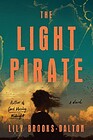
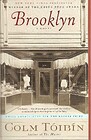
cover image for In Memoriam cover image for Mott Street cover image for The Bright Sword cover image for The Light Pirate cover image for Brooklyn

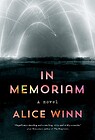
In Memoriam by Alice Winn. Public school boys discover Having Feelings during WWI. This book utterly consumed me. Ate me up, spat me out, and I am better for it.

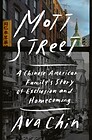
Mott Street: A Chinese American Family’s Story of Exclusion and Homecoming by Eva Chin. Ava Chin’s Mott Street is a memoir but it’s also a history of Chinese people in the United States, from workers on the transcontinental railroad, to the holding center at Angel Island in San Francisco, to the Chinese Exclusion Act.

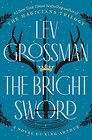
The Bright Sword by Lev Grossman. Exactly the Arthurian book I didn’t know I needed but now will be pushing on all my friends.

The Light Pirate by Lily Brooks-Dalton. Climate change devastates the state of Florida, and we follow Wanda throughout her life in this small town that goes under water. For the amount of loss in this magical realism book it’s astonishing how hopeful it also manages to be.

Brooklyn by Colm Tóibín. I’m late coming to Eilis Lacey, but it meant I got to read Brooklyn and Long Island back to back. Brooklyn is quiet and precise and a treasure of words.

Honorable mentions go to: The Mars House by Natasha Pulley, Real Americans by Rachel Khong, The God of the Woods by Liz Moore, Bear by Julia Phillips, and Bellies by Nicola Dinan.

Tim

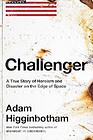
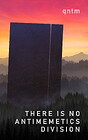
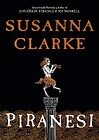
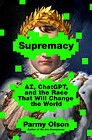
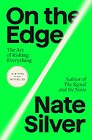
cover image for Challenger cover image for There Is No Antimemetics Division cover image for Piranesi cover image for Supremacy: AI, ChatGPT, and the Race that Will Change the World cover image for On the Edge

Challenger: A True Story of Heroism and Disaster on the Edge of Space by Adam Higginbotham. I’m a glutton for doom. I responded to COVID by reading Higginbotham’s Midnight in Chernobyl: The Untold Story of the World’s Greatest Nuclear Disaster, so I responded to Trump’s election by reading his book on the Challenger explosion. There was doom and gloom indeed—in the decline of NASA and in the organizational breakdowns that produced the accident—but it turned out to be surprisingly inspirational too. The Challenger astronauts were the best of us.

Related: The Wrong Stuff: How the Soviet Space Program Crashed and Burned by John Strausbaugh. Not as compellingly written.

Further wallowing in doom, I picked up Nuclear War: A Scenario by Annie Jacobsen. I agree with nvblue’s review: “It has also been a little while since I’ve read a book this aggressively stupid.”

There Is No Antimemetics Division by qntm. I’m not sure what to do with this bonkers book about “antimemetic” entities—entities you can’t notice or remember, and therefore can’t communicate to others—but I can’t stop thinking about it. It is in any case a fresh idea.

Piranesi by Susanna Clarke. Piranesi is no Jonathan Strange & Mr. Norrell. But it’s weird and wonderful in its smaller way.

Supremacy: AI, ChatGPT, and the Race that Will Change the World by Parmy Olson. Since the release of ChatGPT in November 2022, AI has exploded across technology and culture. But not books. Or at least not good ones. (Amazon and Audible bristle with “Make money with ChatGPT” titles.) Olson’s is the first major account—and it’s a good one.

On the Edge: The Art of Risking Everything by Nate Silver. It’s fashionable to hate Silver these days. After all, he got the election wrong. (In fact, a Trump battleground sweep was his most likely outcome.) On the Edge isn’t as focused as The Signal and the Noise—he needs an editor, or more probably to listen to his editor!—but if you enjoy his dry, nerdy, contrarian brain, you’ll enjoy the book.

Honorable mentions go to: Burn Book: A Tech Love Story by Kara Swisher, Co-Intelligence: Living and Working with AI by Ethan Mollick, MCU: The Reign of Marvel Studios by Joanna Robinson, Packing for Mars: The Curious Science of Life in the Void by Mary Roach, In God’s Path: The Arab Conquests and the Creation of an Islamic Empire by Robert G. Hoyland, and The World Until Yesterday: What Can We Learn from Traditional Societies? by Jared Diamond (in progress).

Kate

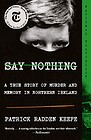
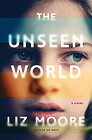
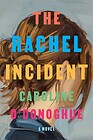
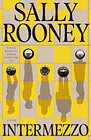
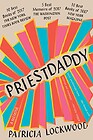
cover image for Say Nothing cover image for The Unseen World cover image for The Rachel Incident cover image for Intermezzo cover image for Priestdaddy: A Memoir

Say Nothing: A True Story of Murder and Memory in Northern Ireland by Patrick Radden Keefe. I’m obviously years late to this one, but it was just as captivating as everyone said it would be. I recommend reading this while visiting married friends in Boston who hail from Ireland and Northern Ireland respectively, so they can share their very different perspectives.

The Unseen World by Liz Moore. I read this on a recommendation from the poet Kate Baer and later discovered that LibraryThing’s own Abby Blachly put it on her Best of 2017 list.

I don’t have the words to describe how much I love Liz Moore’s work. She’s such a skilled writer, adept at bringing you into her worlds and forging bonds between characters and readers. I thought about this book for some time after finishing it.

The Rachel Incident by Caroline O’Donoghue. I recommended this book to a number of friends in reading ruts and it did the trick every time. I want to say it’s like a warm cup of tea, but it’s not without conflict or heartbreak. It’s a wonderful book which I wish I could read again for the first time.

Intermezzo by Sally Rooney. While I consider myself a Rooney Tune (h/t to Brandon Taylor), I wasn’t exactly chomping at the bit to spend 450 pages exploring the inner thoughts of two men. Perhaps my low expectations are what led to me loving this book as much as I did? And I did love it. Very, very much. It’s a story of family and miscommunication, of trying & failing to let go of hurt and of attempts to move forward. It was relatable and beautiful and I (of course) cried.

Priestdaddy: A Memoir by Patricia Lockwood. Patricia Lockwood is a national treasure. She is SO funny and irreverent and just such a clever writer. I originally picked up this book because she wrote about her childhood in St. Louis (my current home), and I fell in love with her writing while reading it.

Honorable mentions go to: The God of the Woods by Liz Moore, Sorrow and Bliss by Meg Mason, and The Wedding People by Alison Espach.

Lucy

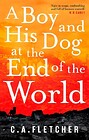
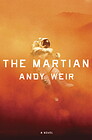
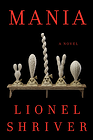
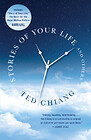
cover image for A Boy and His Dog at the End of the World cover image for The Martian cover image for Mania cover image for Stories of Your Life and Others cover image for Fail-Safe

A Boy and His Dog at the End of the World by C.A. Fletcher. Sometimes a book is so charming and full of heart that you’re willing to overlook its imperfections; this was that type of book for me. The character of Griz was immediately so likeable and compelling. I always love a post-apocalyptic book, and it was nice to read one that was not as bleak.

The Martian by Andy Weir. This book was so much fun to read, just like Project Hail Mary. Such an enjoyable narrator that was funny and intelligent. I learned so much reading this book! Definitely worth reading even if you’ve seen the movie.

Mania by Lionel Shriver. This book was intense. Similarly to Shriver’s book The Mandibles, I found myself thinking that I was living in the world of the story. Overall, this book made me very sad for the characters living in that world.

Stories of Your Life and Others by Ted Chiang. The stories in this book are fascinating sci-fi/speculative fiction. I’ve always loved short story collections. Even if not all the stories are great, there is always the next one!

I particularly enjoyed “Understand” – the story of a person whose intelligence has been enhanced; “Division by Zero” – the story of a woman who inadvertently proves that all of known mathematics is false; “Hell is the Absence of God” – the story of a man who has lost his wife and tries to find God; and “Liking What You See: A Documentary” – the story of an attempt to eradicate “lookism”.

Fail-Safe by Eugene Burdick and Harvey Wheeler. Wow! This book is intense! I knew it was going to be since I saw the movie first, and it was also incredibly intense.

I was surprised I’d never heard of this movie or book, since Red Alert/Dr. Strangelove came out at nearly the same time and that movie definitely overshadowed the film for this book, but I think this one is actually better. It is a great character study and really relates the fears and anxieties of the time.

Honorable mentions go to: This Book is a Planetarium by Kelli Anderson, Battle of the Linguist Mages by Scotto Moore, John Dies at the End by David Wong (AKA Jason Pargin), Fractured Fables by Alix E. Harrow, and The Kaiju Preservation Society by John Scalzi.

Kristi

cover image for We Are All the Same in the Dark cover image for Under the Whispering Door cover image for The Best of Me cover image for This Book Can Read Your Mind cover image for The 5am Club

We Are All the Same in the Dark by Julia Heaberlin. I have not loved a book this much in a long time. Excellent writing, plot, character development; I was fully invested the whole way through. There was a unique sense of place, and you could tell the characters were well-researched. I’ll definitely be reading more by Julia Heaberlin!

Under the Whispering Door by TJ Klune. This story has a very similar feel to The House in the Cerulean Sea: the problematic main character has a life—or, in this case, death—changing experience, becomes a better person, and has a sweet and happy ending. There’s a few endearing characters, a few ugly ones, and at least one catalyst for climactic effect. An easy, enjoyable read!

The Best of Me by David Sedaris. I needed a lot of easy, light reads this year. If you enjoy snort-laughing and a spot of dark humor, look no further.

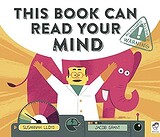
This Book Can Read Your Mind by Susannah Lloyd, illustrated by Jacob Grant. I try to give a nod to my son Finnegan’s collection each year, and this SantaThing pick from 2023 was a great one! Downright silliness, in the best way. My son couldn’t wait for the part about the pink elephants wearing underpants. Written in a style that speaks to the reader, your little ones will love this.

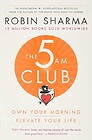
The 5AM Club: Own Your Morning. Elevate Your Life. by Robin Sharma. Dishonorable Mention. Sorry, Robin: while your formulas for success seem simple and straightforward enough, your delivery could really use some work. This self-improvement book was written through a fictional story, which I simply couldn’t get past. It was a distraction of cheesy lines and unbelievable plot, making light of the actual strategies he was trying to get across to the reader. I just couldn’t take this one seriously. Get the Cliff’s Notes version, and call it a day.

Abigail

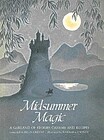
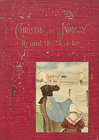
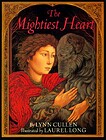
cover image for The Dark Is Rising cover image for The Unicorn Treasure cover image for Midsummer Magic cover image for 'Round the Yule-Log: Christmas in Norway

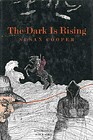
The Dark Is Rising by Susan Cooper. Opening on Midwinter Eve, this immensely powerful and intensely engaging children’s fantasy, the second in Susan Cooper’s five-volume Dark Is Rising Sequence, is a book I read again and again as a girl. This year I undertook a reread of the entire series, together with some friends, and found all of the books as beautiful and engrossing as ever. With its magical Christmas setting, exciting time travel and fascinating Buckinghamshire folklore, this may be my favorite of the lot, although The Grey King comes a close second.

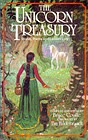
The Unicorn Treasury: Stories, Poems and Unicorn Lore edited by Bruce Coville. Prolific children’s author and fantasist Bruce Coville presents eighteen poems, short stories and novel excerpts in this unicorn-themed anthology from 1988, enhanced by the beautiful artwork of illustrator Tim Hildebrandt. Wondrous, exciting, poignant, humorous—these selections explore the enchantment of this magical creature. Contributors include such authors as Madeleine L’Engle, Jane Yolen, Ella Young, C.S. Lewis, Nicholas Stuart Gray, and Patricia C. Wrede.

Midsummer Magic: A Garland Of Stories, Charms, and Recipes edited by Ellin Greene, illustrated by Barbara Cooney. Storyteller and author Ellin Greene gathers folk and fairy-tales set during midsummer in this lovely anthology, pairing the stories from various sources with brief descriptions of folk practices related to this time of year, as well as midsummer recipes. The latter include such delicacies as Swedish creme, fruit soup, Irish currant cake, heart-shaped cookies and Midsummer cake, while the former covers customs such as the Midsummer tree, various forms of divination (usually to determine a future husband or wife) done at that time, love charms, and magical herbs and flowers.

‘Round the Yule Log: Christmas in Norway by Peter Christen Asbjørnsen. A young military lieutenant, recently ill and unable to travel to his childhood home in the country, looks forward to his first Christmas without his family in this holiday story from Peter Christen Asbjørnsen, the noted Norwegian author and folklorist who, together with Jørgen Engebretsen Moe, is celebrated for his role in collecting Norwegian folklore in the 19th century. I enjoy tales with inset stories, and this one was particularly well done. I was tickled to see that one of the stories related by the lieutenant was The Cat on the Dovrefell, which I have encountered in picture book form at least three different times. The book is part of the late 19th/early 20th-century Christmas in Many Lands series, presenting holiday stories for young people set in diverse locales.

The Mightiest Heart by Lynn Cullen, illustrated by Laurel Long. I have loved this picture book retelling of the traditional Welsh folktale concerning that faithful canine Gelert since its first publication in 1998, and once owned a copy of my own, now lost in a flood. I recently reread it, and it is just as gorgeous a book as ever, pairing a heartbreaking but intensely involving narrative with breathtakingly beautiful illustrations from Laurel Long. I always have a lump in my throat when I think of Gelert wandering lonely in the wilderness, driven off by the one who should have most protected him.

Honorable mentions go to: East o’ the Sun and West o’ the Moon by Sir George Webbe Dasent, illustrated by P.J. Lynch; and The Clown of God by Tomie dePaola.

Zeph

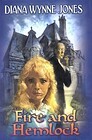
cover image for Piranesi cover image for Fire and Hemlock cover image for Light from Uncommon Stars cover image of The Dispossessed cover image for Big Swiss

Piranesi by Susanna Clarke. Clarke has a knack for inciting intense feelings about her characters in subtle, surprising ways. I almost threw the book out the car window when I finished because I felt too much for these characters. Mysterious, poetic, heartbreaking.

Fire and Hemlock by Diana Wynne Jones. The ballad Tam Lin is a tricky one to relay because it’s dense with folk customs and magical imagery, while also being a mire of moral discomfort. Jones uniquely captures this, and reshapes the ballad format so that a modern reader can see through the fairy glamour to the human tensions therein.

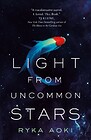
Light from Uncommon Stars by Ryka Aoki. This unlikely collision of beings, personalities, identities, and values is special. I fell in love with everyone a little bit, and I want the very best for them – no matter how many demons, intergalactic wars, or awkward concerts they need to conquer in the process.

The Dispossessed by Ursula K. Le Guin. She makes you think.

Big Swiss by Jen Beagin. I had never read a book with so many unlikeable characters that I enjoyed so thoroughly. They all suck, but it’s great. Made me laugh loudly many times in awkward places at awkward times. Warning: high crass.

Honorable mentions go to: Swimming in the Dark by Tomasz Jedrowski, The Familiar by Leigh Bardugo, Slewfoot by Brom, A Psalm for the Wild-Built by Becky Chambers.

Lauren

That’s it!

Come record your own Top Five Books of 2024 on our December List of the Month, and join the discussion over in Talk.

Labels: top five

Friday, September 11th, 2015

Edit and reorder sources in Add Books

Good news: We’ve improved the sources system within Add Books a lot.

Bad news: We had to transition to an entirely new sources system. Most members kept their sources, but some members and some sources couldn’t go into the new system easily. If you lost sources, you may need to choose them again. Fortunately, the new system’s a lot better at that.

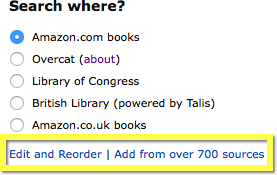
You can find the new options on Add Books:
searchwhere

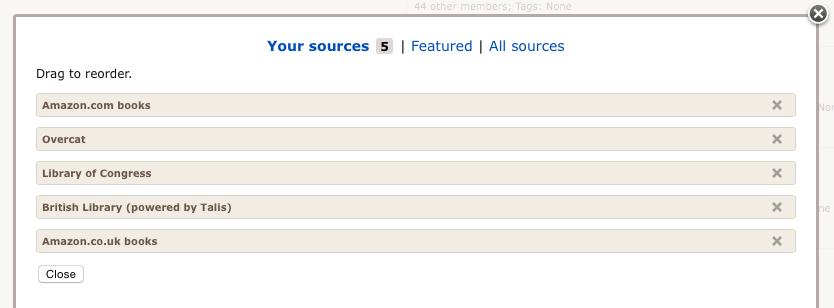
Everything now happens in a light box. The “Your Sources” tab allows you to reorder and delete sources.
yoursources

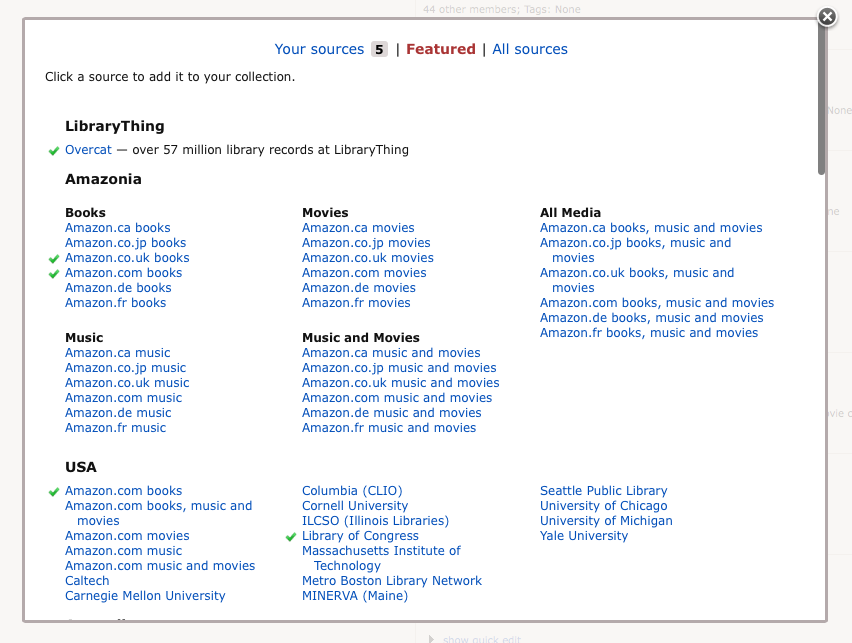
You can browse and choose sources, divided into “Featured” and “All Sources” on the other two tabs.
featured

As you’ll notice, a fair number of our sources are currently down. We’re working to get as many up again as possible, and add new ones. If you’d like to help and know something about Z39.50 connections, you’ll find we give our current connection details when you click the yellow warning marker.

You’ll also see other, very significant new stuff. But that’s a matter for another blog post!

Three cheers to our developer Ammar for the add-books changes!

Labels: cataloging, new features

Tuesday, May 21st, 2013

Books received in Ghana!

We are very happy to report that nearly 3,000 books for the Bright Future School in Keta, Ghana have been successfully delivered and were happily received by the students there earlier this month!

Keith Goddard at Books Matter posted a short video on Facebook of the students saying “thank you,” so check that out if you can (it’s almost guaranteed to make you smile!). Keith reports that the school was actually on break when the books arrived, so there will be more pictures of the students with the books soon.

Earlier this month, another hundred books were presented to the library of the University of Health and Allied Sciences: Ghana TV was even on hand for the arrival of the books!

All of the books sent to Ghana this spring are cataloged on LibraryThing in the Books Matter account, and members have been helping out by adding tags to the library.

Keith is planning on sending the next batch of already-donated books to an orphanage in Kumasi, located in northern Ghana. The orphanage houses some two hundred residents ranging in age from six months to 20 years. The books will be cataloged and tagged on LibraryThing prior to shipment.

If you can help out by making a donation to help ship the books, it would be greatly appreciated! A gift of $1 basically funds the shipment of one book to Ghana, so every little bit helps! Head over to the Books Matter site and you can make a donation today. LibraryThing will be giving a $800 donation as well, from the funds raised by members adding events to LibraryThing Local over the winter.

For more on our Books to Ghana project and our partner Books Matter, see our announcement blog post. To help out with tagging the books or to discuss the project generally, chime in on the Talk thread.

Labels: books for ghana, gifts

Wednesday, January 20th, 2010

Apple highlights Local Books

Apple’s iTunes store has LibraryThing’s Local Books app. (see blog post, direct link) given us a rare honor—a spot among their featured apps.(1)

The exposure has shot us up in the books category, such that we are now—unbelievably—running third in the free section.(2) No matter how long it lasts—and we have no idea of that—it’s great news. The more people grab it, the more become invested in its success. We’re already seeing a pick up in entries to LibraryThing Local. And it puts pressure on us to improve Local and the app too.

Most of all, we hope the success of Local Books can inspire physical bookstores and libraries to embrace the digital world more fully—to put their basic information, events and holdings data out there for us and others to use. Their customers and patrons are eager for it. Only by embracing what the digital world can do for the physical can they compete against the continual advance of ecommerce and ebooks.

So, thanks to Apple for highlighting us, to Chris and John for making the app.(3), and thanks to all the members who entered the data to make it possible.


1. To see it, go to iTunes and click “App Store.” We’re in the third row of apps., next to “Puppy Park” and “Roadside America.” We only appear if the screen is wide enough to hold six icons. We go away if you’re only showing five or fewer apps.
2. The only downside has been that wider exposure has put the app in the hands of people who were, I think, expecting something different. Our ratings have shot down. Fortunately, they’re very much on par with other top apps. It seems iTunes reviewers are a finicky bunch!
3. They will be getting every dime the free app makes us!

PS: If you have an Android phone, check out our Layar app.

Labels: iphone, itunes, local book search, local books

Wednesday, March 26th, 2008

Getting real: Libraries are missing books

Back in March 2006, Jason Fried and his company 37Signals released the book Getting Real: The smarter, faster, easier way to build a successful web application. Originally available in PDF format only, in October Fried released a paper version, produced by Lulu.com, and a free HTML version.

Getting Real is an important book. It came along at exactly the right time, said something important. To the extent the greap web-app “explosion” of 2004-2007 had a book, this was it.

And it was successful. According to 37Signals the (paid) version has sold has 30,000 copies. It’s the number six seller on Lulu.com. Passionate, unpaid fans have produced translations into thirteen languages. Google records 166,000 mentions. Even on LibraryThing, where the book had to be manually entered and there is a bias toward the printed version, 37 members have listed it.

Did libraries notice? Not at all.

OCLC’s WorldCat records exactly three copies—MIT, California Polytechnic and the University of Nebraska. That’s three copies of one of the top tech books of the 00’s in most of the US libraries that matter. The Library of Congress? New York Public? Harvard? None of them. For comparison, WorldCat contains 619 copies of Solitary sex : a cultural history of masturbation.

This is not an isolated phenomenon. Lulu, the online, no-editors, print-on-demand publisher that 37Signals turned to is almost completely ignored by libraries. Take a look at its 100 top-sellers and run the books through WorldCat. I made a start: Lulu’s most popular book, something about ecommerce, is held by NO library in WorldCat. The second, How to Become an Alpha Male, is held by just two.

Let’s be clear, Lulu publishes a lot of crap! But it’s not all crap. And even if it were, publishers like Lulu represent a significant event in the history of publishing—an event libraries should be trying to capture. Lulu isn’t some obscure novelty—it already gets twice the web traffic of HarperCollins.

I am a passionate defender of libraries and library data—of the relevance of libraries now and going forward. LibraryThing is the only significant service of its kind to use library data and to link liberally to libraries. I believe in the expertise to choose and classify—that innovations like social cataloging and tagging supplement but do not replace expert classification. LibraryThing has as many librarians as programmers. I like blogs, but I love books.

But this throws me completely. How could libraries miss this?


Thanks to LibraryThing members for bringing this topic up.

Addendum (moved from comments): I’m not that concerned about regular public libraries, excluding the Bostons and the NYPLs. They’re about access more than comprehensiveness and preservation. These books are available. I think it would be great if one of the jobbers added Lulu to their list, and the top-selling Lulu books were found in large publics, but I have my eye on academics.

Take the number two book—”How to be an alpha male.” Many universities have large and active gender-studies departments. Taking GR’s numbers and assuming a long-tail distribution of sales, we can guess that book has cleared 60-100,000 copies. I suspect that if HarperCollins or Random House published such a book, they’d be all over it, and not because of any notion of “quality.” They’d get it because it would be an important document of American gender identity.

Instead, I’m afraid its absense is a document of American publisher- and librarian-identity.

Labels: 37Signals, collection development, getting real, libraries, library science

Friday, June 29th, 2007

Find LibraryThing an employee, get $1,000 worth of books.

We need to find two excellent employees, a PHP hacker and a systems/database guy or gal, so we’re offering $1,000 worth of books to each of the people who find them. Think of it. $1,000 in books. What would you buy? Everything.

Rules! You get a $1,000 gift certificate to Abebooks, Amazon, Booksense or the independent bookseller of your choice. You can split it between them. You don’t need to buy books with it (but why do that?).

To qualify, you need to connect us to someone. Either you introduce them to us—and they follow up with a resume and etc.—or they mention your name in their email (“So-and-so told me about LibraryThing”). You can recommend yourself, but if you found out about it on someone’s blog, we hope you’ll do the right thing and make them the beneficiary.

Small print: Our decision is final, incontestable, irreversible and completely dictatorial. It only applies when an employee is hired full-time, not part-time, contract or for a trial period. If we don’t hire someone for the job, we don’t pay. The contact must happen in the next month. If we’ve already been in touch with the candidate, it doesn’t count. Void where prohibited. You pay taxes, and the insidious hidden tax of shelving. Tim Spalding and his family (all his family, Oakes) are not eligible, but if Abby wants to work Simmons or Altay his startup connections, fine. Abebooks employees are not eligible for this (but the internal offer still stands).

Needless to say, we’ll throw in a free lifetime membership, so you can catalog your loot. And you’ll get the satisfaction you helped LibraryThing become everything it could be.


Here are the job announcements:

UPDATE: We’ll take a look at people not in New England, especially for the DBA position.

Two jobs—dream jobs for the right people. We may hire one person or two, depending on what we get. (We’re happy to look at resumes with a mix of talents, or other talents.) Both jobs are located in the New England area, with some potential for telecommuting.

Syadmin/DBA

LibraryThing, the web’s largest and most innovative site for book lovers, is looking for a smart and experienced systems and database administrator. We value brains and talent above everything, but demonstrated experience with complex, high-traffic LAMP websites is essential to this position.

  • MySQL. Query optimization, replication, tuning, maintenance, recovery.
  • Systems administration. Linux administration, security, maintenance and recovery. Installation of new hardware.
  • Programming. You don’t need to start out a PHP guru, but you’ll have to support this part of the site.
  • Personal qualities. Speed, intelligence, reliability, high availability, good communication skills and sang-froid.

Hacker/Developer

We’re also looking for a crackerjack PHP/MySQL developer. To qualify you must be passionate, creative, flexible–and fast.

  • PHP. We write terse, losely modular non-OO code.
  • HTML, CSS, Javascript.
  • MySQL. Knowledge of query optimization, replication and MySQL internals a plus.
  • Design or UI talents a plus.
  • Knowledge of social networking, math, statistics, collaborative filtering, bibliographic data or library systems a plus.
  • You must learn quickly and communicate effectively. Skills and attitude matter; experience per se does not.

How We Work

LibraryThing has a somewhat unusual development culture. It is not for everyone.

  • We develop quickly, knocking out features in hours or days, not weeks. We value results, not process.
  • We develop incrementally and opportunistically, assuming that member feedback will sometimes overturn our plans in mid-course, and that some projects will fail.
  • Everyone who works for LibraryThing interacts directly with members.
  • We value initiative and intellectual engagement. You must be able to work alone or in a small team.
  • We are only accepting applications from people within driving distance of Portland, ME or Cambridge, MA. We are currently headquartered in Portland, ME–the second floor of a gorgeous three-family along the Eastern Prom.–but may relocate to the Boston/Cambridge, MA area.
  • LibraryThing is more than a job for us. We work long, hard and usually sober, but not necessarily during “regular” hours. We love what we do. We want someone who will feel the same way.

About LibraryThing

LibraryThing is a social cataloging and social networking site for book lovers. Started in August 2005 as a hobby project, LibraryThing has grown to a handful of employees and some 215,000 members in a dozen countries. Members have cataloged 15 million books and applied almost 20 million tags. We are well known in the library world, and rapidly winning over booksellers, authors and publishers.

Contact Tim Spalding (tim@librarything.com) for more information, or to send a resume.

Labels: jobs

Sunday, June 17th, 2007

Fifteen million books!

Going down, like the Titanic.

LibraryThing has hit fifteen million books.

Number 15,000,000 was a 1963 edition of The Greek Way by Edith Hamilton, added by dukedom_enough at 8:57am on June 15. For his luck, Dukedom earns a free gift membership.

Now begins the countdown to a major milestone: becoming the second largest “library” in the US, and with or soon after that, the second largest in the world, gulp.

LibraryThing is not of course a “real” library. You can’t take the books out, they do a lot more with them, and we have a lot more duplicates. We have only about 2.5 million distinct “titles.” But the comparison gives a sense of relative scale to the enterprise.*

Anyway, the tally is now as follows**:

  1. Library of Congress — 30,011,748
  2. Harvard University — 15,555,533
  3. Boston Public Library — 15,458,022
  4. LibraryThing — 15,081,543
  5. Yale University — 12,025,695

With luck, we’ll settle in behind the Library of Congress in 10-15 days. At 30 million, they’re going to take a while to beat.

When will we hit second in the world? Unfortunately, I can’t find a good list of world libraries by volumes. Everyone concedes that the Library of Congress is the largest library. The rest is foggy. Wikipedia has the British Library at 150 million items, and 22 million volumes. The Bibliothèque nationale and the Berlin State Library are at ten million volumes. (The German National Library is said to have 22 million items, but items aren’t volumes.) The stubby entry for the National Library of China speaks of it as:

“… the largest library of Asia and with a collection of over 22 million volumes (including individually counted periodicals, without these around 10 million), it is the fifth largest in the world.”

Which raises the question, does the ALA Factsheet also count periodical volumes separately?

Tim is dead. (Credit)

Surpassing the BPL in any way feels blasphemous; I love the place so much that comparing LibraryThing to the BPL—well, the lions should eat me for thinking it. But Harvard will be sweet. I lived most of my life in Cambridge, MA, but the bastards rejected me twice—undergrad and grad! So, in that spirit, and with Yalies protecting my back, let’s beat that little pile of books over at Widener.


*There are all sorts of problems with these numbers. In fact, libraries don’t really know how many books they have. LibraryThing has a small percentage of items that aren’t books, and a larger number that are “wished for” other otherwise ephemeral. At the same time, many of LibraryThing’s “books” are composed of multiple volumes. So, we’re in the neighborhood of 15 million anyway.

LibraryThing demonstrates something we always knew—that regular people have a lot of books—probably many times what all the world’s libraries hold. I’ve never seen the relative numbers discussed. It never mattered before, but now that regular people can put their catalogs online and engage in tasks, like tagging and work disambiguation, that bear on age-old issues of library science, it’s not entirely pointless to compare the two.

I want to underscore that, in making the comparison, we mean no disrespect to libraries. I think I’ve got some proof that LibraryThing has always been on libraries’ side. Our first hire, Abby, was a librarian. We have always favored library data, where our many recent competitors only care about Amazon’s data. We link to libraries extensively, something no competitor does. And we are grateful that our work has been of interest to the library world—Abby and I have become minor fixtures on the library speaking circuit.***

**Source: ALA Factsheet: The Nation’s Largest Libraries.

***My Library of Congress talk will be online soon, as will my recent keynote at the Innovative Users Group meeting in Sligo, Ireland.

Labels: 1

Friday, December 7th, 2007

Someone poke Syria

News reports* indicate that Syria is now blocking Facebook, alleging Israeli spies were infiltrating Syrian social networks. One can doubt that given some of the other sites on Syria’s blocked list—YouTube, Blogspot, Hotmail, Skype and—wait for it—Amazon.

But not LibraryThing! Syria bans sites, China bans sites. Heck the UAE just banned Twitter!** But we never get banned, by those guys or anyone else; our competitors don’t get banned either. I’m almost sorry about it. YouTube might someday bring down a government, but people talking about books does it all the time.


*See: SeattlePI, Washington Post/Reuters, Mashable, Fox/AP, Jerusalem Post.
**As a certified member of the Web/Lib 2.0 set I’m supposed to think Twitter is a serious thing. I don’t. I don’t fall for the argument that only books matter, or that blogs are giving us the attention spans and intellectual perspicacity of squirrels. And I don’t think social networking is vain shadow of real-life connection. But there is some lower limit to the length of an idea and the depth of a connection—and Twitter is it!

Labels: censorship, syria

Tuesday, April 7th, 2026

Author Interview: Shelley Noble

Shelley Noble

LibraryThing is pleased to sit down this month with best-selling author Shelley Noble, whose many novels run the gamut from historical fiction to mystery to contemporary women’s fiction. A former professional dancer, Noble toured with Twyla Tharp Dance and American Ballroom Theater, and has worked as a choreographer for film and theater productions. She earned her BFA and MFA at the University of Utah, and taught at California State University in Fresno. A former president of Sisters-in-Crime, Noble is a member of Mystery Writers of America, Romance Writers of America, and Liberty States Fiction Writers, and currently lives in New Jersey. Her newest novel, The Sisters of Book Row, was published by William Morrow in March 2026 and tells the story of three sisters and bookstore proprietors who confront the Comstock laws in 1915 Manhattan. Noble sat down with Abigail this month to discuss the book.

How did the story idea for The Sisters of Book Row first come to you? Were you drawn to the thought of writing about bookstores and booksellers, or perhaps about the Comstock laws?

I’ve had Comstock in the back of my mind for a while, a perfect villain, a vicious zealot, one who I particularly despise. So when my editor suggested I write a book about books, guess who came to mind. And because I write about Manhattan, I knew the perfect place in which to set the story, Book Row, once the mecca of rare and used book buyers from around the world. And like a magnet, this germ of an idea began collecting bits and pieces. An article about the current Cohen sisters of the Argosy Book Store inspired me to create the Applebaum sisters, and Sisters was born.

Tell us about the Comstock laws. What were they, and what effect did they have on the world of books and booksellers, as well as the wider American society of that time?

Anthony Comstock moved to New York in the early 1870s and was appointed special agent to The Society for the Suppression of Vice and the U.S. Post Office to prevent pornography from being sent through the mail. He was given the power to search, seize, arrest and fine, the monies of which he received half. His activities quickly spread to all facets of life, and as his power grew, his ideas of what was “obscene, lewd, or lascivious,” changed, sometimes from week to week. Later in his career, his extreme and outlandish views made him a laughing stock, ridiculed by the newspapers, and dismissed by the courts. The Post Office fired him, but he refused to leave. The NYSPV replaced him, but again he ignored them and continued on his crusade. The Comstock Act, enacted in 1873, included a ban on contraception and was written by Comstock himself. It was never repealed, but Roe v. Wade relegated it to being a zombie law. Unfortunately states had adopted the original law for their own use. And today we see it being used to prevent birth control information, or any reproductive health measures from all women. A zealot, who is said to have destroyed 15 tons of books and four million pictures and other materials, who hated women and died ridiculed and despised, and yet he has managed to rear his ugly head again today.

Your story is set on Book Row, a district in lower Manhattan that contained over three dozen bookstores at its height. Did you have to do any research about the history of the area, and what were some interesting things you learned? If you could visit any bookstore from that period, which would it be? (Disclosure: I worked for the Strand bookstore—the sole survivor of Book Row—for many years).

I used to hang out at the Strand all the time. Many years ago. It was a solace and an adventure away from the chaos of the city and my profession as a young dancer. I hope my Sisters of Book Row can come to life for readers of today. I did loads of research, I always do. It’s one of my favorite parts of writing historical fiction. There’s a lovely book titled Book Row by Marvin Mondlin and Roy Meador. It didn’t have as much information on my particular period 1915 as I hoped, but it was fascinating to read about the continuation of this community, especially post 1930.

Once I get an overview of my time and place and characters, I like to depend mainly on primary sources, newspapers, anecdotes, letters. That way I know what they know, feel what they feel, and try to leave my historical outsider’s knowledge at the door. I mostly learned the neighborhood in bits and pieces since the area has built up so much since then.

Some oddities and coincidences: The Argosy, owned by Louis Cohen, the father of the Cohen sisters who added their inspiration to this story had his own run in with “Comstockery” in the 1930s. When the city began digging the new subway, customers couldn’t get around construction, and many stores had to move uptown, then moved back in when it was completed. After I developed and had lived with my three Applebaum sisters and the Arcadia for weeks and several chapters, I learned that there was actually a Mr. Applebaum who had a bookshop in the Row, named Arcadia. Did I read about it and forgot while it became ingrained in my subconscious? Or was it really a coincidence? I was too attached to my own Applebaums to change their names, so I mentioned the existence of two families in my Author Notes.

Sometimes a story is like a jigsaw puzzle, learning a phrase, a sentence about the inhabitants. The two booksellers, who were constantly arguing, gave me an image that led to the daily morning conversations around the newsstand. They might have argued and complained, but they were neighbors and they were ready to take up a collection to bail one of their own out of jail when Comstock was on the prowl.

The book world has been rocked in recent years by an upsurge of attempts at censorship and book suppression. I chronicle some of that in the Freedom of Expression column of our monthly State of the Thing newsletter. What can your story tell us about our situation today, in this respect?

For our modern selves, I wish The Sisters of Book Row and their withstanding the attacks of what they loved most was so outside of our experience, so unbelievable, that readers might say. “Oh, that would never happen here.” But unfortunately we see it happening throughout our country by those who, like Comstock, denounce books they’ve never even read and bully those who only want to share knowledge. Their attacks sometimes seem so diffuse and widespread that we might think it will never affect us. It will, but I have to believe that we’re more experienced, more aware of the rotten core of the book banning movement, and that if we keep up a constant resistance, we will prevail.

Tell us a little bit about your writing process. Do you have a particular routine—a schedule you keep, or a place you like to write? You write in a number of different genres, does your story-building process differ, depending on the genre?

I do have a routine though it has changed over the years and books. When I wrote two books a year, I had a tighter schedule. Now that I’m writing one historical I can linger in the research, jump down a rabbit hole or two. And I find that writing of the past, I’ve changed from being an early morning writer, to a late night writer. There’s something about the dark and the quiet that I find conducive to delving into the past. Of course the nearer I get to deadline, the more daytime writing I have to do. I have a home office where I write all my books. Each genre requires a different energy and attitude. The contemporaries don’t require as much deep dive research, so I can begin writing sooner than with the historicals. No matter the genre, I depend on a storyboard to keep everything on track. Not a computer screen board but a big gridded Lucite board on the wall with color coded post-its for characters and plot points that can be moved around as the story develops.

What comes next for you? Are there any new books you’re currently working on?

I’m currently working on a story that takes place in 1870 Long Branch, New Jersey, where President Grant has his summer capital and a young woman aspiring to become a lawyer confronts the changes and the scandals that threaten the quiet seaside town she calls home.

Tell us about your library. What’s on your own shelves?

Lots of history books, mainly early 20th century New York, late 19th American theatre books when the Rialto was Union Square. Dickens, Austen, Mary Stewart. A rotation of women’s historical fiction. Eastern religion. Mystery and science fiction. I’m a pretty eclectic reader.

What have you been reading lately, and what would you recommend to other readers?

This fall I decided to go on a rereading spree. I started with Fahrenheit 451 followed by 1984 right before the holidays. Yes, they are still as scary as when I read them in school. After that, I immediately pulled out my favorite chapters of The Pickwick Papers. Now I’m re-rereading The Hobbit, and reading A Founding Mother** about Abigail Adams, by Stephanie Dray and Laura Kamoie. I highly recommend all of these.

**Stay tuned for our interview with Stephanie Dray and Laura Kamoie this coming July, in honor of America’s 250th birthday!

Labels: author interview, interview

Help/FAQs | About | Privacy/Terms | Blog | Contact | APIs | WikiThing | Common Knowledge | Legacy Libraries | Early Reviewers | Zeitgeist