Archive for the ‘libraries’ Category

Thursday, June 27th, 2024

TinyCat’s June Library of the Month: The Indian Pueblo Cultural Center

I’ve been eagerly hoping for an interview with our current TinyCat’s Library of the Month since they joined us in 2018. It is my pleasure to feature the Indian Pueblo Cultural Center in Albuquerque, New Mexico, whose library is run by Archivist & Librarian Jonna C. Paden. Jonna was kind enough to field my questions this month and share more about their important work:

Who are you, and what is your mission—your “raison d’être”? 

The Library & Archives is part of the Indian Pueblo Cultural Center (IPCC) located in Albuquerque, New Mexico. The library is a special collections, non-lending research library dedicated to the culture, traditions, history and lives of the 19 Pueblo nations of New Mexico and the Ysleta del Sur in El Paso, Texas. We provide publications and information about Pueblo and Indigenous peoples and communities of North America. We aim to provide materials that reflect the voice and perspective of Pueblo and other Indigenous peoples about their history and contemporary activities. 

The IPCC Library & Archives holds over 8,500 books about the twenty Pueblo and other Indigenous nations. As a research library, we primarily hold nonfiction titles across a range of subjects. We have dissertations and theses by Pueblo scholars and about Pueblo topics. We have historical and contemporary materials, including books that are no longer in print. 

We are currently open to the public Tuesday through Friday from 9am to 5pm (MDT).

Tell us some interesting things about how your library supports the community.

The library supports Pueblo educators, researchers, students and community members within the city of Albuquerque, and nearby and distant Pueblo communities, IPCC staff and volunteers, and the general public. The library hosts the Pueblo Book Club quarterly and features a variety of Native authors or topics significant to Native American history. I also write a blog, Indigenous Connections and Collections, which features various Native American topics and is a great research resource. We are a welcoming place that supports research about Pueblo people and topics. If we don’t have the material, we can help connect to a library or place that does.

What are some of your favorite items in your collection?


I love the Children’s and Juvenile section! The fiction and non-fiction books are primarily Indigenous authored and illustrated with engaging stories and beautiful tribally representative Native artwork. Young Indigenous readers can see accurate portrayals of themselves and role models in these books.We also have unique materials not found elsewhere like reports and collected research materials donated by archaeologists and others. Donations like these are greatly appreciated! We also have a collection of newspaper articles dating from the 1980s to the mid-2000s which highlights Pueblo artists and writers and the activities and changes of Pueblo and tribal communities during this time.

What’s a particular challenge your library experiences?

Contrary to what some people might think, there is a lot of work done in libraries from cataloging to shelving, data entry to responding to research requests, and so on. Our challenge is staffing, so a catalog that makes processing books easier is very helpful.

What’s your favorite thing about TinyCat and is there anything you’d love to see implemented or developed?

TinyCat is very user friendly for anyone to catalog and is very affordable for small libraries. (I use it for my personal home library, too!) I love that an app has been added that populates data entry fields by scanning the book’s barcode. I also like that there are a variety of ways to customize and view the Take Inventory page depending on what details you want to see.

Thanks so much for the feedback, I’m glad to hear TinyCat is smart and easy for you to use!

Want to learn more about the IPCC? 

Visit their website at https://indianpueblo.org/library-archives/ and check out their full TinyCat collection here.


To read up on TinyCat’s previous Libraries of the Month, visit the TinyCat Post archive here.

Want to be considered for TinyCat’s Library of the Month? Send us a Tweet @TinyCat_lib or email Kristi at kristi@librarything.com.

Labels: libraries, Library of the Month, TinyCat

Friday, April 26th, 2024

TinyCat’s April Library of the Month: The Annisquam Village Library

TinyCat’s Library of the Month is just a short drive down I-95 from LibraryThing’s Portland, ME headquarters: the Annisquam Village Library in Gloucester, MA has been serving their community since 1904! Janet Langer, a retired librarian and member of the Library Committee, is in charge of collection development and was kind enough to answer my questions this month. Here’s what Janet had to say:

Who are you, and what is your mission—your “raison d’être”? 

The Annisquam Village Library (AVL) is located in the northern part of Gloucester, MA, a city known for its early ties to the fishing industry. The library has been a fixture in the village for generations and many of our patrons have visited the library since they were children, as did their family before them. We have both year-round and seasonal (summer) residents of all ages who use our library, but most of our patrons are adult recreational readers who are retired. Our goal is to provide them with engaging reading material and meaningful community events.

Tell us some interesting things about how your library supports the community.

The AVL is a central part of village life, particularly in the off-season when many local businesses are closed and activities are curtailed due to winter weather. We are open on Monday from 3:00 – 5:00 and Saturday from 9:00 – 11:00. On Monday we serve tea and refreshments, with a “high tea” once a month, a tradition that began many generations ago. On Saturday we serve coffee and pastries. Residents love to stop by and enjoy a warm fire, conversation with neighbors, and access to our collection of reading material. Refreshments are provided by volunteers who bake and help with set up and clean up each day we are open. Many of our patrons make generous donations of current books to our collection as well. We host an evening of poetry, author talks, and an annual summer party to raise funds for the library. As with many libraries, ours is a gathering place for the community and is used by other groups.

What are some of your favorite items in your collection?


Our collection consists primarily of current fiction, with a healthy offering of mystery titles for those who love this genre. We have a children’s corner for readers under twelve years old which includes picture books, early readers, juvenile fiction series, and some non-fiction titles. We feature our local authors in a special collection since many of our residents have written novels, non-fiction books about their careers, or family histories related to their time in Annisquam. And finally, we have a small collection of books about Gloucester’s history for use in the library. We work with our local historical society to make material available to those who are interested in our heritage, including the fishing and boat-building industry, early tourism, the granite industry, and artists who resided in the area.

What’s a particular challenge your library experiences?

I’d have to tell you about the challenge that we overcame in the last five years or so: The library collection at that point consisted almost entirely of books donated by residents once they had read a particular work. There was no systematic collection maintenance, so over many years the shelves filled and the books grew old and musty. We were fortunate to have a library committee with a new chairwoman, all of whom supported or pitched in on an extensive weeding of the collection and cleaning of the library, hiring a new librarian, and developing a robust collection for our community. TinyCat was a fundamental part of this library relaunch. Every book has been entered into the catalog and the catalog is now online for people to search when we aren’t open. We’ve also built an accurate database of our patrons which has made communication with them more effective. It was a big change for our long-time residents and there were some raised eyebrows, but most have embraced the new collection and accepted the digital catalog.

That sounds like a wonderful success story for your library, I’m so glad to hear it! Speaking of LibraryThing and TinyCat, what’s your favorite thing about the system and is there anything you’d love to see implemented or developed?

First of all, I appreciate the support from the TinyCat staff, from setting up our catalog to addressing questions and technical issues over the years. As I mentioned, TinyCat has been central to our collection management strategy. It has allowed online access to our catalog and simplified our circulation procedures. As a retired librarian, I’m responsible for collection development, and I value the statistics, reports, and charts available through TinyCat. This data helps me in meetings with the library committee and with weeding projects. I wish the reports could be customized a bit more: it would be helpful to run a transaction report that was sorted by the tags I’ve assigned to titles, or a report where the entries could be listed alphabetically by author. (Forgive me if this is already an option and I just don’t know how to do so!)

Great feedback, thanks! I’ll add your suggestions to our list and we’ll be sure to announce any improvements to TinyCat’s Reports.

Want to learn more about AVL? 

Visit their website at https://annisquamvillage.org/village-library, and check out their full TinyCat collection here.


To read up on TinyCat’s previous Libraries of the Month, visit the TinyCat Post archive here.

Want to be considered for TinyCat’s Library of the Month? Send us a Tweet @TinyCat_lib or email Kristi at kristi@librarything.com.

Labels: libraries, Library of the Month, TinyCat

Thursday, March 21st, 2024

TinyCat’s March Library of the Month: Toowong Bridge Club

TinyCat’s Library of the Month is all about fun and games! Or, rather, the particular card game of Bridge (formally known as Contract Bridge). The Toowong Bridge Club based out of Brisbane, Australia has been using TinyCat since 2021 to make sure their members can always access the library to advance their skills. 

I had the pleasure of interviewing Toowong Bridge Club Librarian Jill Duffield for the feature, and here’s what she had to say:

Who are you, and what is your mission—your “raison d’être”? 

The Mission of the Toowong Bridge Club, by implementing TinyCat, was to make the library more accessible to the 800+ members so they could improve their game of Bridge.

Tell us some interesting things about how your library supports the community, and feel free to share how you got started with TinyCat.

Before we moved to automating the TBC Library there were over 800 books on the game of Contract Bridge that had been collected over the years since the Toowong Bridge Club opened in 1965. Members were able to browse the physical shelves of the Library for 30 minutes before each game started. They were assisted by volunteers on different days who recorded books that were borrowed on a borrowers’ sheet. When the books were returned, these books were crossed off this sheet. Members did have access to a simple printed subject catalogue at this time.

Toowong Bridge Club members at play.

In 2020 I was asked by the TBC Committee to investigate an affordable way to automate the Library. After looking at over eight free or very inexpensive systems, I recommended the Club use TinyCat. I then spent almost a year cataloguing each Bridge book. I tried to provide a recognisable tag for every chapter of every book. Some books have up to 20 tags attached to them. I was conscious that I needed to keep these tags consistent as I worked and we now have over 100 tags that can be attached to books. Members appreciate that they can search via the tags as well as via title or author.

When I had completed adding the books to TinyCat, I sent the link to the catalogue to all members. Initially it was intended that the books would be signed out using the barcode reader but it was decided with the number of different volunteers assisting with the library, it was easier to continue using the “Borrowers’ Record Sheet” and this appears to work well for us. Members now look at the website at home and come to the club to ask to borrow particular books after noting their call numbers. We are very pleased with the look of the TinyCat website and the access it gives members to our collection. 

What are some of your favorite items in your collection?

The newest books by Barbara Seagram appear to be the most popular so I have purchased them in multiple copies. I also run the “Book Stall” stand in the Toowong Bridge Club, where members donate their fiction books which we “sell” for $1 per book. The money raised is used to buy new books for the Bridge Club Library.

What’s your favorite thing about LibraryThing and TinyCat, is there anything you’d love to see implemented or developed?

My favourite thing about TinyCat is the fact that it is so easy to add books to the catalogue. I love that you can search for a new book and just add it to TinyCat without having to do a full catalogue. I then edit the record by adding the call number, tags, barcode and photo if necessary. I found the ease of arranging the look of the TinyCat web page, that is seen by the elderly borrowers, was great too. I left out a lot of information that I knew they would not need so the page remains clear.

Yes, I highly recommend LibraryThing for small libraries. I have been using my personal account since about 2011 to keep track of my novel reading too. Thank you Kristi and your  team!

I’m so glad TinyCat has worked so well for your Bridge Club and its members!

Want to learn more about the Toowong Bridge Club? 

Visit their website at https://www.toowongbridgeclub.com/index.asp, and check out their full TinyCat collection here.


To read up on TinyCat’s previous Libraries of the Month, visit the TinyCat Post archive here.

Want to be considered for TinyCat’s Library of the Month? Send us a Tweet @TinyCat_lib or email Kristi at kristi@librarything.com.

Labels: libraries, Library of the Month, TinyCat

Thursday, February 29th, 2024

TinyCat’s February Library of the Month: Ingleside at King Farm

TinyCat’s Library of the Month is that of a wonderful life plan community called Ingleside at King Farm (IKF), located just outside of Washington, D.C. IKF’s collections are actually two separate libraries managed by a volunteer committee, many of whom are former librarians.

I had the pleasure of interviewing IKF’s Library Committee Chair Judy Sandstrom for this month’s feature, here’s what she had to say:

Who are you, and what is your mission—your “raison d’être”? 

Ingleside at King Farm is a life plan community of about 500 residents in Montgomery County, Maryland, about 10 miles from Washington D.C.  

When it opened in 2009, the then about 300 residents donated books from their personal collections and a volunteer library committee developed a database record of the library.

New construction in 2019 brought an additional 200 residents, a new location for the library, and additional retired librarians. At that point we were able to migrate to TinyCat and expand our collection.

Very soon after Covid hit and we had to modify our lending practices. Library access was closed, and residents sent email requests to the committee. Books were signed out and placed in bags outside the library for pick up. Thankfully we are back to normal library operations. 

We manage two libraries totaling 4000+ books and DVDs, one for independent living residents, the other for assisted living residents who are housed on a separate floor.

The library is managed by a committee made up in large part by former librarians from various types of libraries: public, school, law, and federal, as well as volunteers who love libraries.

Image: IKF’s Volunteer Library Committee

Tell us some other interesting things about how your library supports the community.

We publish a monthly column for our inhouse newsletter focusing on different aspects of our collection ranging from columns on how to access TinyCat from our online platform to “books of the month”. 

We have a large print collection in the Assisted Living Library

Our homepage has been modified to add links to our county library system and libraries for the blind or accessibility challenged residents.

What are some of your favorite items in your collection?

We have a collection of about 25 books written by our residents.

What a vibrant and interesting community! Is there a particular challenge your library experiences?

Because our library has no budget, we depend on donations from residents. Additionally, our space is limited resulting in restrictions in the number and type of books we will accept.

Our committee was hoping to use the TinyCat online checkout system, but because our residents range in age from 70 to 100+, the steps required are not practical for this community.

What’s your favorite thing about LibraryThing and TinyCat, and what’s something you’d love to see implemented/developed?

The display of new book covers brings residents to the library pretty quickly! We love the feature “Similar in this Library.”

We instituted a barcode project hoping to use it for online checkout but find it helpful with general circulation. TinyCat made the project simple and quick.

Because our holdings are limited and some residents are visually and mobility challenged, we would love to have a seamless link to Libby from our homepage.

You can certainly add a link to your library on Libby, if you have one (such as this one for the Montgomery County Public Library), or you can add live links to individual records by using LibraryThing’s “Comments” field (which show up as “Local notes” on TinyCat Detail pages), but let me know if you’re looking for something else!

Want to learn more about Ingleside at King Farm?

Check out their full TinyCat collection here.


To read up on TinyCat’s previous Libraries of the Month, visit the TinyCat Post archive here.

Want to be considered for TinyCat’s Library of the Month? Send us a Tweet @TinyCat_lib or email Kristi at kristi@librarything.com.

Labels: libraries, Library of the Month, TinyCat

Monday, January 29th, 2024

TinyCat’s January Library of the Month: The U.S. Cavalry Memorial Research Library

The U.S. Cavalry Memorial Research Library (USCMRL) has been with LibraryThing since 2018 so I’m very glad to feature them as our first 2024 Library of the Month. USCMRL’s Volunteer Reference/Research Librarian and Cavalry Journal Editor Samuel Young was kind enough to answer my questions this month. Here’s what he had to say:

Who are you, and what is your mission—your “raison d’être”? 

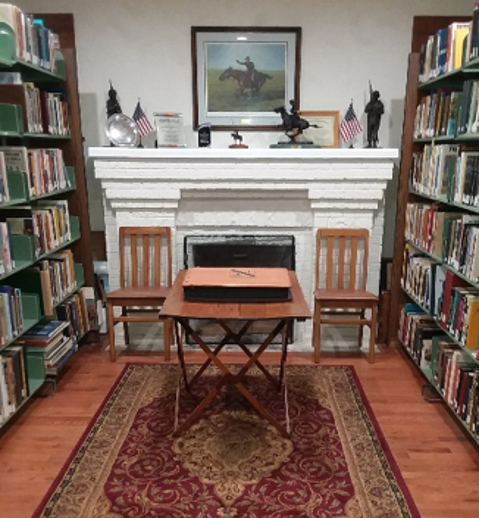
The U.S. Cavalry Memorial Research Library (USCMRL) is a key part of the U.S. Cavalry Association (USCA) (a not-for-profit 501(c)(3) organization). It serves as the repository of U.S. Cavalry archives, biographies, books, flags, histories, interviews, journals, manuals, manuscripts, microfilm, papers, periodicals, pictures, and other spoken, digital, and written materials. The USCMRL is totally a research and reference library.

Tell us some other interesting things about how your library supports the community.

The USCMRL is located on the north side of old Fort Reno, which is on the western edge of El Reno, OK. The old fort is also the home of the Grazinglands Research Laboratory of the U.S. Department of Agriculture.

Cheyenne-Arapaho Tribal lands include the area around El Reno. Thus, we have expanded the library’s collection of books on those tribes, to include Indian culture and language—spoken, written, and sign language.

Because Fort Reno was a cavalry & infantry post for thirty years, then, for forty years, a U.S. Army remount depot, the library’s archives have material on those seventy years and of some of the local civilians who worked there.

The cavalry community resides all over the world. Thus, the USCMRL is designed to be accessed digitally with digital responses. If it is a book we have, they should be able to get it through their local library or purchase it from their local bookstore or online.

The library section of the USCA website offers access to many of the items in the USCMRL repository as well as other cavalry resource sites.

What are some of your favorite items in your collection?

*Sample items from the online catalog pictured above. Full LibraryThing catalog can be found here.

What’s a particular challenge your library experiences?

Like most small libraries, space for the library’s collections. But we are managing it very well with our two volunteer staff: an archivist and a reference/research librarian.

What’s your favorite thing about LibraryThing and TinyCat, and what’s something you’d love to see implemented/developed?

LibraryThing is AWESOME! The cataloged books can be accessed via our website which makes it available to any and all researchers, especially since it links the books to Amazon for the additional and very helpful information found there! We have no recommended changes for TinyCat.

Want to learn more about the USCMRL?

Visit their website at https://uscavalryassociation.org/library/, explore their full TinyCat collection here, and their LibraryThing catalog here.


To read up on TinyCat’s previous Libraries of the Month, visit the TinyCat Post archive here.

Want to be considered for TinyCat’s Library of the Month? Send us a Tweet @TinyCat_lib or email Kristi at kristi@librarything.com.

Labels: libraries, Library of the Month, TinyCat

Monday, November 20th, 2023

TinyCat’s November Library of the Month: Centre A

TinyCat’s November Library of the Month features a unique art gallery in Canada, Centre A: Vancouver International Centre for Contemporary Asian Art. The Centre’s Interim Artistic Director Diane Hau Yu Wong was kind enough to field my questions this month. Here are her thoughtful replies about their work:

Who are you, and what is your mission—your “raison d’être”? 

Centre A: Vancouver International Centre for Contemporary Asian Art is a leading public art gallery currently situated in the heart of Vancouver’s Chinatown, on the unceded territories of the Musqueam, Squamish, and Tsleil-Waututh peoples. It is a registered charity and the only public art gallery in Canada dedicated to contemporary Asian and Asian-diasporic perspectives since 1999.

Centre A is committed to providing a platform for engaging diverse communities through public access to the arts, creating mentorship opportunities for emerging artists and arts professionals, and stimulating critical dialogue through provocative exhibitions and innovative public programs that complicate understandings of migrant experiences and diasporic communities.

The reading room and library at Centre A (pictured left) began in 1999 with contributions from artists, researchers, and curators both locally in Vancouver and internationally. The reading room emerged out of the need to collect a body of literature on Asian art practices, and by extension creating transnational ties with international arts communities. Past curators at Centre A have made significant contributions in collecting publications that reflect and engage in conversations concerning contemporary Asian and Asian diasporic art practices, and the artistic relationships between North America and Asia.

Centre A’s reading room includes the Fraser Finlayson Collection of rare books on Classical Chinese and Japanese Art with publications dating back to the late 19th century. Included in the reading room are also recent publications that have been donated by galleries, artists and artists collectives, and curators. In addition, we house monographs, artist ephemera, exhibition catalogues, art criticism writings, and artist’s books that have contributed to the diverse livelihood and possibilities of the reading room as a site of cultural production. Some publications in the reading room include books by Ai Weiwei, Santiago Bose, Yayoi Kusama, Mona Hatoum, Reena Saimi Kallat, as well as other notable artists.

Tell us some other interesting things about how your library supports the community.

Centre A activate our library space through a number of public programs, for example in 2022 we hosted our inaugural Art Writing Mentorship where we provided 8 Asian-Canadian youths the opportunity to learn from established writers, editors, artists, and curators in a professional setting, while receiving exclusive networking opportunities, mentorship, supervision, and feedback on their writing. We also participate in Art and Feminism Wikipedia Edit-a-thon every year, often including resources from our library. As part of the A+F, we also host workshops and reading groups, panel discussions, and artist talks. 

We also welcome community members to come visit the library and encourage students to spend time in the space during our opening hours.

That’s quite a rich array of offerings, I’m guessing your collection reflects much of the same quality. Do you have any particular favorites in your collection?

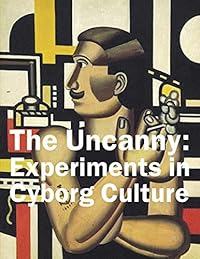
My personal favourite item in our collection is an exhibition catalogue from the Vancouver Art Gallery titled The Uncanny: Experiments in Cyborg Culture. I do research on the potentiality of different iterations of futurisms, including Asian Futurism, Afrofuturism, Indigenous Futurism, and more. Discussion of cyborgs is very prominent in Asian Futurism and The Uncanny is a very important text in that research.

What’s a particular challenge your library experiences?

At the moment, we do not have a system or staff capacity that allows us to lend out books; I would like to change that in the next 5 years.

What’s your favorite thing about TinyCat, and what’s something you’d love to see implemented/developed?

My favorite thing about TinyCat is how easy it is to use! It creates a system in which we can easily manage our wide range of books on Asian and Asian diasporic art and make it easily accessible for our audience. Keep up the good work!

Want to learn more about Centre A?

Visit Centre A’s Reading Room page at https://centrea.org/reading-room/ and explore their full TinyCat collection here.


To read up on TinyCat’s previous Libraries of the Month, visit the TinyCat Post archive here.

Want to be considered for TinyCat’s Library of the Month? Send us a Tweet @TinyCat_lib or email Kristi at kristi@librarything.com.

Labels: libraries, Library of the Month, TinyCat

Wednesday, October 25th, 2023

TinyCat’s October Library of the Month: The National Railway Historical Society (Washington, D.C. Chapter)

Railfans, rejoice: October’s Library of the Month features the Washington, D.C. Chapter of the National Railway Historical Society. I thoroughly enjoyed learning more about their work from Volunteer Librarian Ralph R. Bitzer. Thanks to Ralph for fielding my questions this month:

Who are you, and what is your mission—your “raison d’être”? 

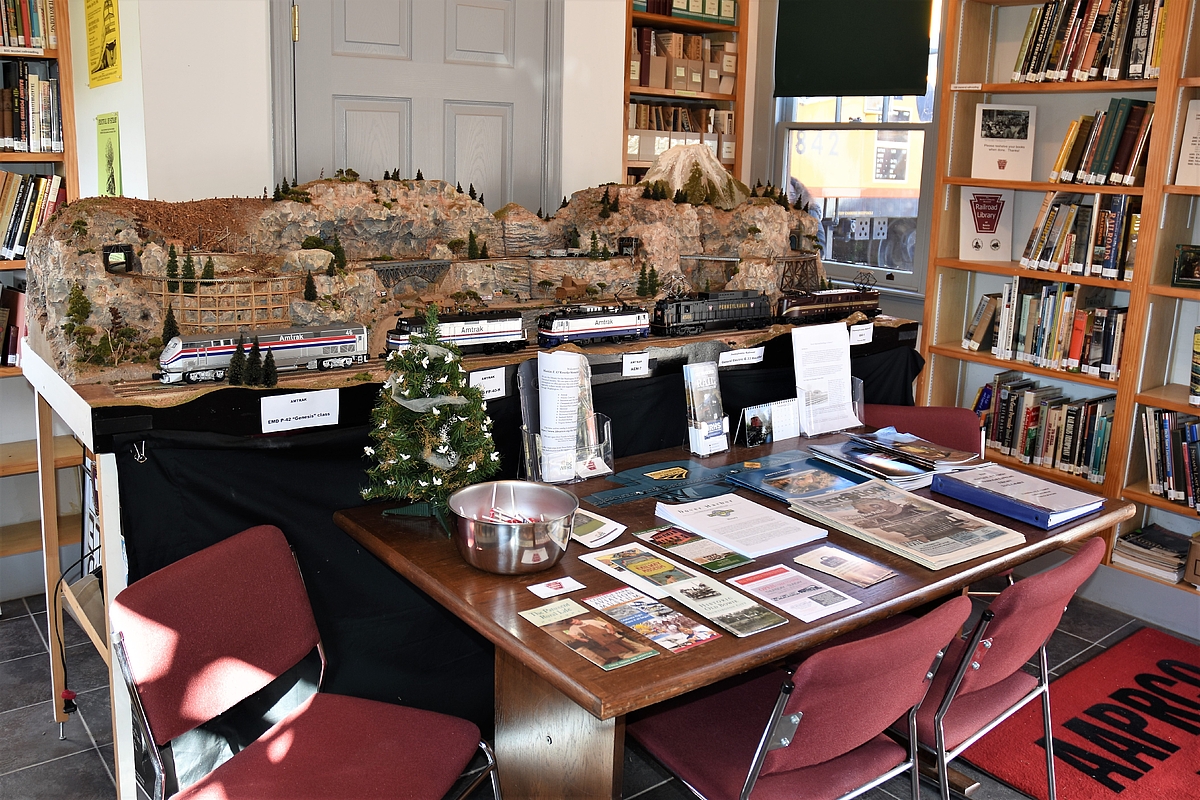
We are the Washington, DC Chapter of the National Railway Historical Society, Inc. Our chapter was founded in 1944. We currently are one of the largest chapters in the Society. The chapter is a volunteer not-for-profit 501(c)(3) organization. The Martin F. O’Rourke library was opened to the public on September 22, 2007. The library is named in memory of longtime member and former Chapter President Martin F. O’Rourke. The library is located in the base of the former Pennsylvania Railroad Bowie Tower (pictured below), which is now part of the Bowie Railroad Museum complex including the tower, a freight station, passenger shelter, railroad caboose and visitor center. The museum complex is located in the historic district of Bowie, MD adjacent to the Washington DC-New York Amtrak rail corridor (formerly Pennsylvania Railroad).

Our mission is to provide information about railroading both from historical and current perspectives. Our emphasis is on railroads originating from the eastern United States. However, with over 1200 volumes on railroading and many hundreds of railroading magazines we cover the railroad industry from many regions and perspectives both in the U.S and many foreign countries. We also have a selection of books for children to learn about and enjoy railroading.

Photo courtesy of Ralph Bitzer.

Tell us some other interesting things about how your library supports the community.

The library is open to the public through the City of Bowie Museum group and can be accessed Friday, Saturday and Sunday from 12:00pm to 4:00pm. We are a research library only and do not have a book lending program. However, we have many members in our organization who can help with research on railroad topics. 

We have open houses to our library several times a year for the public. One of the major events we have been doing for many years with the City of Bowie Museum group is Trainspotting Day on the Sunday in November after Thanksgiving. This is the busiest train operation day in the year on the AMTRAK Washington DC-New York City rail corridor. There are many areas around the museum complex where visitors can watch trains and then learn more about them in the library and museum exhibits.
We also participate in the Old Bowie Community Festival. The library is open and staffed by our volunteers. We have book sales to the public to enable learning about railroads and to help raise money for library projects.

What are some of your favorite items in your collection?

Photo courtesy of Ralph Bitzer.

We have an extensive collection of Baltimore & Ohio Railroad employee magazines which give a very good perspective on railroading from the early 1900’s through the 1950’s, what railroad life was like for employees over a period of many years, and how things have changed.Extensive and in-depth histories on both the Pennsylvania Railroad and the Baltimore & Ohio Railroad. These were two of the primary railroads in Washington DC and Maryland.

What’s a particular challenge your library experiences?

Space limitations. Expansion is difficult because of the amount of room space in the lower section of the tower in our present location. We must limit books that can be added to the permanent collection. We are storing books for possible future inclusion offsite in some of the chapter’s railroad equipment. These are not accessible to the public.

What’s your favorite thing about TinyCat, and what’s something you’d love to see implemented/developed?

Overall, we find the program easy to use and provide information in a logical and usable reporting system. We would like better instructions for creating Excel or CSV worksheets from data files.

Thanks so much for the feedback. You can export your library catalog in various formats from LibraryThing’s More > Import/Export page (including Excel and .tsv format), but I can certainly help guide you with additional formatting you might want.

Want to learn more about DCNRHS?

Visit their website at https://dcnrhs.org/, follow them on YouTube and Facebook, and explore their full TinyCat collection here.


To read up on TinyCat’s previous Libraries of the Month, visit the TinyCat Post archive here.

Want to be considered for TinyCat’s Library of the Month? Send us a Tweet @TinyCat_lib or email Kristi at kristi@librarything.com.

Labels: libraries, Library of the Month, TinyCat

Friday, September 29th, 2023

TinyCat’s September Library of the Month: DANK Haus German American Cultural Center

I had the pleasure of interviewing a wonderful cultural center for TinyCat’s Library of the Month, the DANK Haus German American Cultural Center based out of Chicago. Cultural Director Sarah Matthews was kind enough to field my questions this month. She didn’t hesitate to give much praise to volunteer librarian Chris Graves, who spends time every week helping out at the library! Here’s what they shared about their work:

Who are you, and what is your mission—your “raison d’être”? 

The DANK Haus German American Cultural Center’s mission “is to preserve and promote German culture, heritage, and language through maintaining a center consisting of a museum, art gallery, library, and language school, and organizing educational and social programming focusing on and emphasizing the history, traditions, and contributions of Germans and German Americans.” The DANK Haus library is one important element of our center, and features a variety of German literature, both fiction and nonfiction. The books in our library are written in German and accommodate young adult and adult readers.

Tell us some other interesting things about how your library supports the community.

Another aspect of the DANK Haus is our school, or Kinderschule, where we offer children’s classes and adult language classes, and our library has the opportunity and ability to directly support our school. While the library on our fourth floor contains our young adult and adult literature, our children’s books are located on the third floor where the school classrooms are, so students can have these resources readily available to them. However, you do not need to be enrolled in the school to use our library! Anyone is welcome to not only visit the library, but check out books when interested.

What are some of your favorite items in your collection?

I love that our collection is tailored to a wide range of genres and reading levels. We offer books for a younger audience such as Schöneli und Schlau, which is a short chapter book that features small illustrations. I also appreciate our selection of cookbooks in German, like Brot und Brötchen. This way readers can not only explore the German language, but German culture, as well. Lastly, I am glad we have a nice selection of German language, grammar, and vocabulary books on hand for people to use, especially since a portion of our visitors and members are learning German through our school.

What’s a particular challenge your library experiences?

Currently, our in person engagement in the library is low. Groups pre-COVID-19 pandemic regularly used the space for library and language related events, but establishing that type of gathering has been difficult to accomplish again. DANK Haus would love to establish more regular, consistent hours of operation for the library, and offer more events in our space to allow for a wider audience to be reached and for our library resources to be used more frequently!

What’s your favorite thing about TinyCat, and what’s something you’d love to see implemented/developed?

I really appreciate the ease and accessibility TinyCat offers. Especially for people who maybe don’t frequent library cataloging systems and online databases often, TinyCat’s cataloging system is easy to use, and people with varying technological skill sets can effectively search for what they are looking for. On that note, however, Chris, our weekly volunteer librarian at the center suggested one improvement could be to add a help link to show people how to search for books using the catalog, just in case visitors prefer to learn from specific, written instructions.

That’s a great suggestion. We have a Help page for patrons here, in the Help Wiki, but perhaps we should automatically show that within TinyCat. You can always link to it from your Homepage, if you’d like. I hope this helps!

Want to learn more about DANK Haus?

Visit their website at https://dankhaus.com/Library-Research, and explore their full TinyCat collection here.


To read up on TinyCat’s previous Libraries of the Month, visit the TinyCat Post archive here.

Want to be considered for TinyCat’s Library of the Month? Send us a Tweet @TinyCat_lib or email Kristi at kristi@librarything.com.

Labels: libraries, Library of the Month, TinyCat

Friday, August 18th, 2023

TinyCat’s August Library of the Month: The Monell Chemical Senses Center Library

TinyCat’s Library of the Month is all about the senses of taste and smell: introducing the Monell Chemical Senses Center Library! Associate Member and Chair of the Library Committee Danielle Reed, Ph.D., was kind enough to field my questions about the fascinating work their library assists with:

Who are you, and what is your mission—your “raison d’être”? 

Our library supports a non-profit research institution called the Monell Chemical Senses Center. To unpack what our name means, Monell refers to the family that contributed to our institution’s founding and continues to support us through the Monell Foundation. The ‘chemical senses’ part of our name refers to taste and smell, which allow us to sense chemicals in our environment, on our tongue (taste) and noses (smell). We are a Center because we are the only institution in the world devoted solely to studying taste and smell. Our mission is basic research, which you can learn when you open a textbook, and clinical research, which has immediate practical benefits, such as testing a new way to treat smell loss. Our mission is important because while taste and smell do not get the same attention as vision and hearing, the loss of these senses with COVID-19 made many people more aware of their value. Many people regain these senses as they recover, but some people have not. 

What relevant timing for your work. Can you tell us some other interesting things about how your library supports the community?

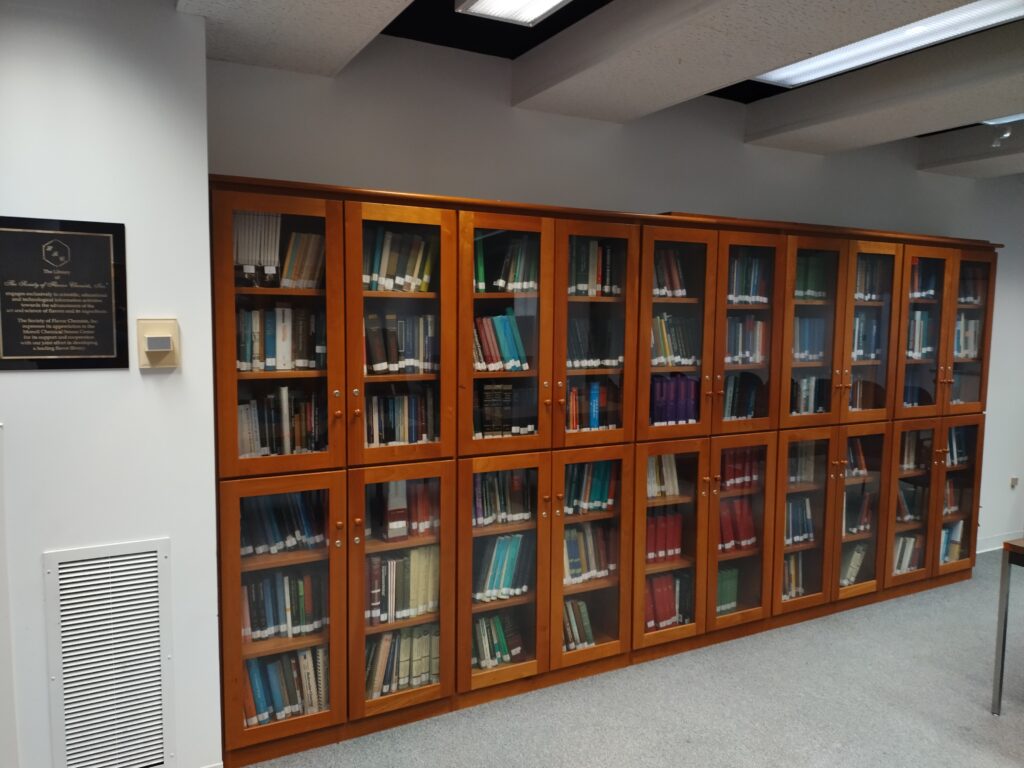
We are a ‘subject library’ meaning that we only have material relevant to taste and smell, and we have early “hard to find” journals like Chemical Senses and technical reports from industrial groups like the Sugar Foundation. We also have dissertations from people who were among the first scientists to work at Monell, as well as books and conference proceedings. We even have a small cache of children’s books focusing on taste and smell. 

We are an appointment-only library, and while I care about books, I am not a trained librarian – but I know enough to help the scholars who want to come and work in our library and get professional help with cataloging. I am especially proud that I helped Nadia Berenstein (http://nadiaberenstein.com/about-me) find materials for her dissertation about flavor and flavor chemistry.

How very cool! Do you have any particular favorite items in your collection?

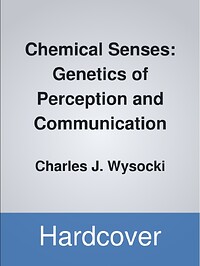
My favorite item in our collection is a book called Genetics of Perception and Communication, about why and how individuals differ in their taste and smell perception. Members of a species, from bacteria to humans, use chemicals to communicate, e.g., bacteria secrete chemicals called quorum-sensing molecules to let other bacteria know it is safe to expand and grow (or not), mice communicate their health and sexual status in their urine, and humans use chemicals in many ways to communicate, either consciously or unconsciously. This book has chapters written by scientists who are experts in their area, and it covers species from invertebrates, mice, rats, and humans. I love it because it is a rare book on an underappreciated topic. 

Your library clearly hosts a rich array of resources around taste and smell. Is there a particular challenge that your library experiences?

One challenge for our library is to keep our mission focused on taste and smell and ensure that we have a comprehensive collection but don’t amass books that are not directly in our topic area. We get many book donations, especially from retiring scientists, and while many books are a fit for our subject site, many are tangential. Another challenge is figuring out what to do with these just-miss books and where to donate them so that they do the maximum good for scholars and others interested in them. 

What’s your favorite thing about TinyCat, and what’s something you’d love to see implemented/developed?

Our favorite thing about TinyCat is that it does the job we need at a price point we can afford, and we would love to see it expand to do archive cataloging. We are preserving documents of enduring value, especially those from our creation and early history, and TinyCat does not have archive features, e.g., Omeka.

You can already catalog custom media using LibraryThing’s existing fields—putting the name of an item or artifact in the “Title” field, adding tags or reviews as needed, etc.—and you can organize them under the “Media” field. See our blog post on cataloging custom materials for more information on this process. That said, we can certainly discuss anything further that you’d like to see! I appreciate the feedback.

Want to learn more about the Monell Chemical Senses Center?

Visit their website at https://monell.org/, and explore their full TinyCat collection here.


To read up on TinyCat’s previous Libraries of the Month, visit the TinyCat Post archive here.

Want to be considered for TinyCat’s Library of the Month? Send us a Tweet @TinyCat_lib or email Kristi at kristi@librarything.com.

Labels: libraries, Library of the Month, TinyCat

Wednesday, July 12th, 2023

TinyCat’s July Library of the Month: Les Fruits de Mer’s Soualibra Library

TinyCat’s Library of the Month goes to a wonderful non-profit, Les Fruits de Mer‘s Soualibra Library, which is focused on educating the public about all things St. Martin. (St. Martin is the northern French side of the Caribbean island shared with its southern Dutch counterpart, Sint Maarten.) Being a personal repeat visitor to the island, myself, I was thrilled to interview the association’s co-founder and volunteer Mark for this month’s questions:

Who are you, and what is your mission—your “raison d’être”?

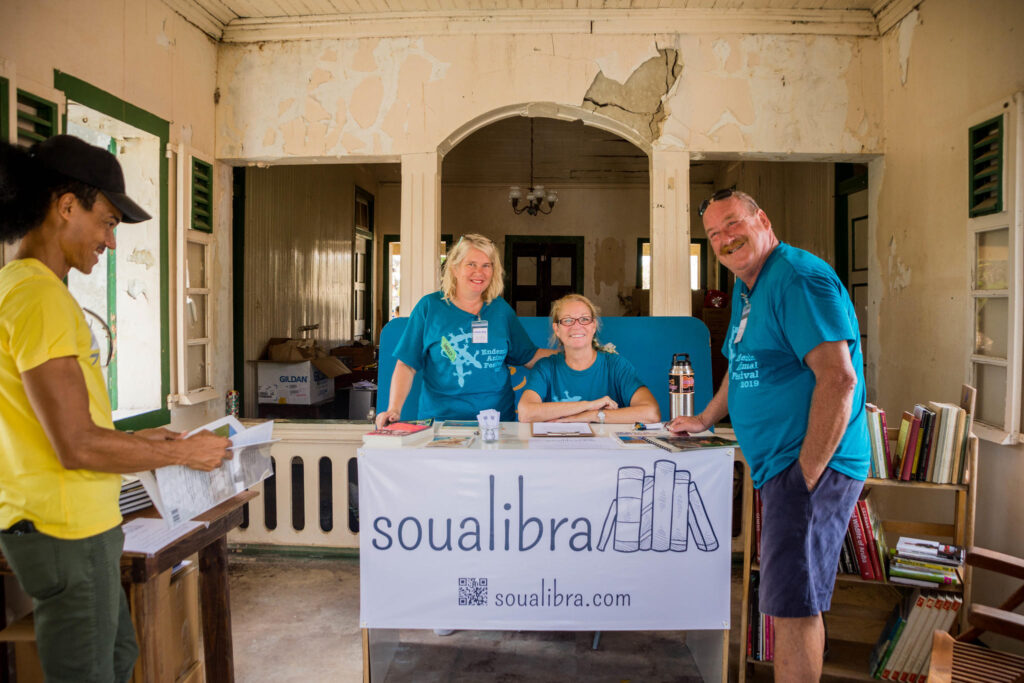
Les Fruits de Mer is a non-profit association based on the island of St. Martin. Our mission is to provide education on local nature, heritage and culture. We have a free museum, Amuseum Naturalis. We also publish books about local subjects. One of our goals is to give a book to every student on the island every year they are in school. To do this, we’ve been developing books for all ages on a range of local subjects. Last year we gave away over 7,500 books. All our books are also available as free downloads.

Volunteers at one of Soualibra’s local events.

What an incredible project! Can you tell us some other interesting things about how your library supports the community?

Our library is called Soualibra. It’s named after one of the Amerindian names for St. Martin, Soualiga. In 2017, Hurricane Irma destroyed all the libraries on the island. Because we had a museum, students were coming to us when they needed to do research. We decided to start Soualibra as a research library. Our collection is focused on books about St. Martin. 

What are some of your favorite items in your collection?

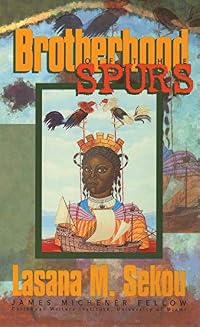
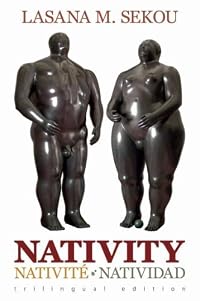
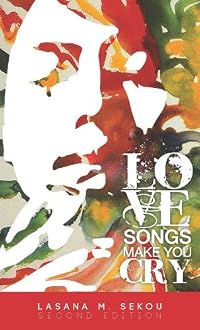
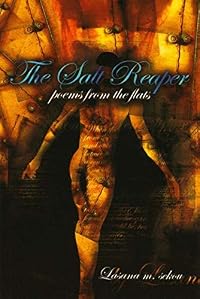
We have quite a few books by Lasana M. Sekou and other local poets that are currently out of print. They are a really great window into the cultural life of the island before I lived here. And really enjoyable. Ideally, they would all be back in print, but at least we have copies available to people who are interested. 

What’s a particular challenge your library experiences?

We would love to have every book about St. Martin, but some of the older ones are very hard to find. On the other hand, we have managed to track down many older books, even ones with very small local printings. This is one thing that motivated us to publish books, because they do survive. It’s the best way to ensure information is still accessible in 100 years.

What’s your favorite thing about TinyCat, and what’s something you’d love to see developed?

I love that it is easy to use and for most books I can scan the barcode to add them. I don’t know if I need any new features, since we probably only use a fraction of the current capabilities. We have book clubs and a lot of book lovers on St. Martin and I wish there were more local reviews of local books. I am always looking for someone interested in reading and writing about St. Martin books and it would be great to integrate those local reviews into the catalog.

We could always consider allowing internal reviews for TinyCat libraries, down the line, thanks for your feedback!

Want to learn more about the Soualibra Library and Les Fruits de Mer?

Visit the library’s website at http://soualibra.com/, Les Fruits de Mer’s website at https://www.lesfruitsdemer.com/ (with all of their published books at https://www.lesfruitsdemer.com/resources/books/), and explore their full TinyCat collection here.


To read up on TinyCat’s previous Libraries of the Month, visit the TinyCat Post archive here.

Want to be considered for TinyCat’s Library of the Month? Send us a Tweet @TinyCat_lib or email Kristi at kristi@librarything.com.

Labels: libraries, Library of the Month, TinyCat

Wednesday, June 21st, 2023

TinyCat’s June Library of the Month: The Nancy & Joe McDonald Rainbow Library

TinyCat’s Library of the Month is the Nancy & Joe McDonald Rainbow Library based out of Tulsa, Oklahoma. The library’s namesake, Nancy, is past National President of PFLAG and current President of PFLAG Tulsa. I had the pleasure of learning more about the library from Library Director Michelle Simmons, who was kind enough to answer my questions this month:

Who are you, and what is your mission—your “raison d’être”?

The Dennis R. Neill Equality Center in Tulsa, OK

The Nancy & Joe McDonald Rainbow Library was started by Nancy McDonald to provide a place for her daughter to be able to find LGBT resources after she “came out.” Since Nancy began her equal rights work, the library has grown from a place that houses a smattering of books to a collection of almost 4,000 volumes. In the past year, and especially the past few months, the library has gone from being a more passive resource on the second floor of the Dennis R. Neill Equality Center, to an active voice in creating and preserving access to 2SLGBTQIAA+ materials to the greater community.

Can you tell us more about how your library supports the community?

I love getting to bring books to different groups of people that would otherwise not know of the library’s existence. Or, if they did know, didn’t have easy access to it physically. I’ve connected with a local—and one of the few remaining—GSAs (Genders & Sexualities Alliances), and I bring an assortment of books for them to check out every couple of weeks. Another amazing event was the Banned Book service at All Souls Unitarian Church last year. A record number of people attended that service, and the library was set up right outside the entry doors. So every single person who attended that service had the opportunity to learn about the library.

That’s great exposure! Speaking of your library, what are some of your favorite items in your collection?

I love some of the older gems, for example: And God Bless Uncle Harry and His Roommate Jack Who We Are Not Supposed to Talk About and Lesbian Etiquette. As far as books that impacted me personally, Stone Butch Blues ranks at the top. 

What’s a particular challenge your library experiences?

We are needing to remove all the labels on the books and relabel them. There have been a few cataloging systems put into place over the years, and we are wanting to standardize and modernize it, as well as make it look uniform and professional. Peeling labels off of 3,000 books takes a lot of time, and since we are 100% volunteer-run (including myself), it is taking a very long time. However, once we are done, it will be so much easier to label books for different locations as we open them up and keep track of what we have. 

What’s your favorite thing about TinyCat?

100% the online capability for us. Before, people would have to come into the Center and go upstairs to find things in the library. Now they can search from their own devices. What would help us out a lot is the ability to modify genres and add our own. We are relying on tags and collections to sort books by age range, interest, and segment of the community; and honestly, it’s a little overwhelming.

That’s great feedback, thanks. You can already edit your own Genres on LibraryThing itself, and I’m hoping that we can soon bring individual Genres through TinyCat as well. If you want to add brand new Genres, please let us know what you’re looking for on Talk!

Want to learn more about the Nancy & Joe McDonald Rainbow Library?

Visit their website at http://okeq.org/ and explore their full TinyCat collection here.


To read up on TinyCat’s previous Libraries of the Month, visit the TinyCat Post archive here.

Want to be considered for TinyCat’s Library of the Month? Send us a Tweet @TinyCat_lib or email Kristi at kristi@librarything.com.

Labels: libraries, Library of the Month, TinyCat

Thursday, April 13th, 2023

TinyCat’s April Library of the Month: The Traveling Library CCTX

This month I had the pleasure of interviewing a traveling nonprofit library in Texas working to get more books in the hands of readers who need them. And they just celebrated their 2nd birthday! Congratulations to The Traveling Library CCTX (Corpus Christi, TX). Here’s what their Founder and Executive Director Abigail Trevino had to say about the library:

Who are you, and what is your mission—your “raison d’être”?

The Traveling Library CCTX is exactly how it sounds! We’re a traveling library! A library on wheels! A bookmobile! These are all things that we have been called and have loved. It doesn’t matter how people describe us because the mission has always been the same. Our mission is to provide access to knowledge, encourage the exercise of rights, provide inclusion in society, and freedom for all. The Traveling Library provides knowledge to those in need by providing literature and other resources that are needed. The mission of The Traveling Library was inspired by my grandfather and uncle, who were both big supporters of education and reading.

What an inspiring story of origin! Can you tell us more about how your library supports the community?

The Traveling Library CCTX supports the community by providing literature to areas that might not have access to it. We accomplish this by bringing the traveling library that is fully stocked with books!

We also partner with other local organizations that can help us distribute other resources that are needed. For example, we partnered with a local organization that provides period hygiene products to people that need them at no cost. We bring these products with us when we are serving vulnerable populations such as the unhoused community. Another community partner is the Corpus Christi Hooks, our local double AA affiliate baseball team. Various staff from the CC Hooks will join us when we do story time at local schools. Sammy the Seagull is a fan favorite among the kids! 

How fun! Speaking of story time, what are some of your favorite items in your collection?

The Traveling Library CCTX is an intellectual freedom library meaning we carry and have all sorts of books. Because of this, I would say that some of my favorite books in our collection are our banned books, specifically Fahrenheit 451. I love the message the book conveys, and of course it doesn’t hurt that I love Ray Bradbury. The entire Judy Moody series is always one of my favorites: I loved those books as a kid! 

What’s a particular challenge your library experiences?

Like any other nonprofit organization we struggle with finding the monetary donations that it takes to run this mobile library. A particular challenge that we are currently facing is not enough space! We currently operate out of a small cargo trailer and have too many books to fit inside. We’re currently trying to raise funds for the purchase of a much larger trailer that can hold a lot more books and serve more areas in our city! 

What’s your favorite thing about TinyCat?

I love that TinyCat is easy to operate and the staff is very personable. Every time I have needed help, a staff member responds quickly and offers as much help as they can!

We’re so glad to help!

Want to learn more about The Traveling Library CCTX? 

Visit their website at https://www.thetravelinglibrarycctx.com/, follow them on Facebook/Instagram/Pinterest, and explore their full TinyCat collection here.


To read up on TinyCat’s previous Libraries of the Month, visit the TinyCat Post archive here.

Want to be considered for TinyCat’s Library of the Month? Send us a Tweet @TinyCat_lib or email Kristi at kristi@librarything.com.

Labels: libraries, Library of the Month, TinyCat