Archive for the ‘ebooks’ Category

Wednesday, September 22nd, 2021

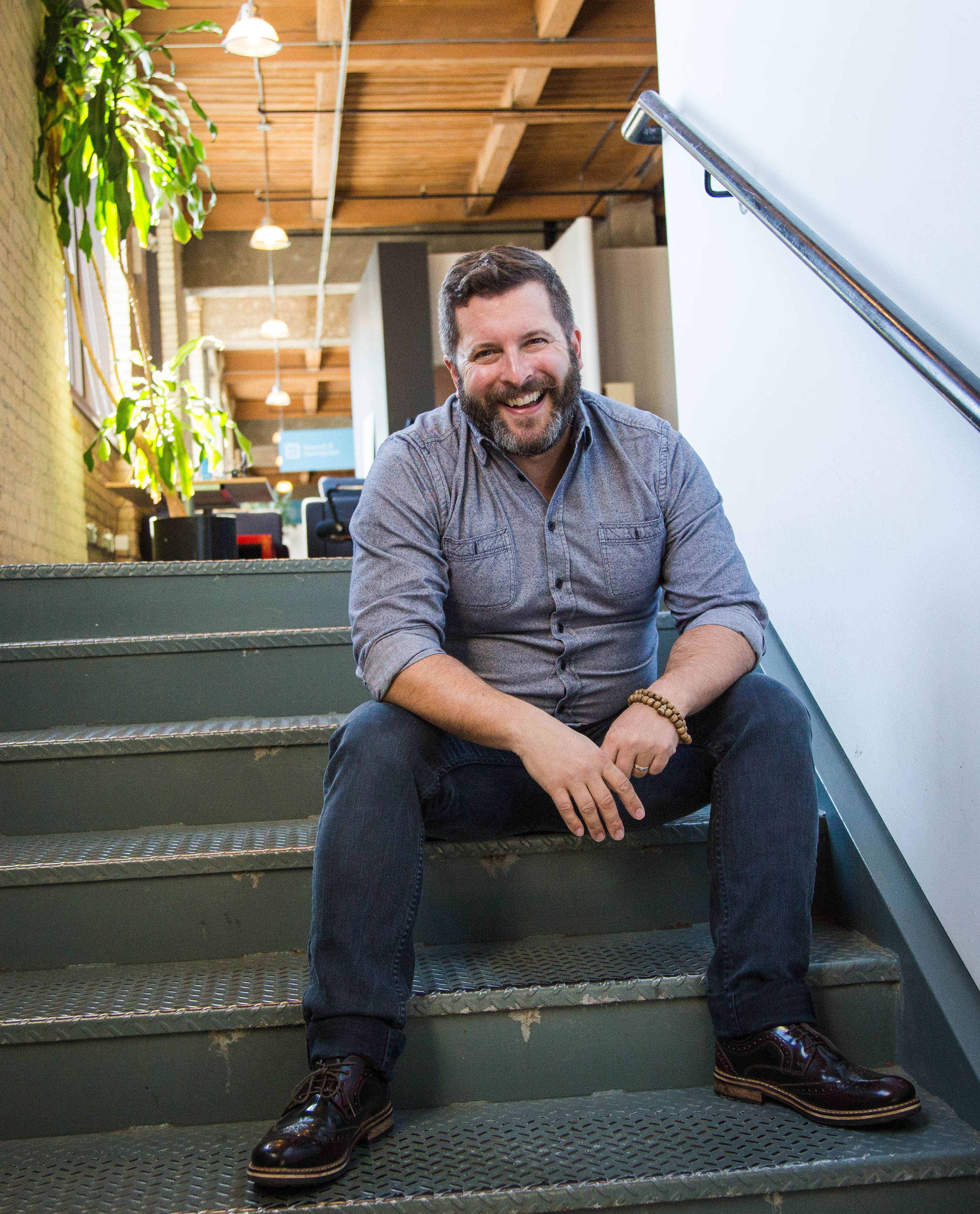
An Interview with Michael Tamblyn, Rakuten Kobo CEO

This month LibraryThing is pleased to catch up with Michael Tamblyn, the CEO of Rakuten Kobo, a Canadian ebook, audiobook and ereader company doing business in 150 countries. Tamblyn serves on the board of OverDrive, an ebook distributor working with both the non-profit and retail sectors; is involved with AGE-Well, a Canadian organization dedicated to developing technology and services for healthy aging; and is the founder of BookNet Canada, a “non-profit organization that develops technology, standards, and education to serve the Canadian book industry.”

What drew you to the book business and book technology?

I always loved bookstores. The small town where I grew up had a pretty standard books+cards+stationary store, but I thought it was fantastic and I began bugging the owner for a job at 11 or 12. He was a bookseller of the old school, wore three piece suits to work retail, and had absolutely no need of an urchin to work in his store. Fast forward 8 or 9 years, I’m working my way through a university degree in music, cooking at a restaurant that was attached to the iconic Canadian indy store, The Bookshelf. The store manager stuck his head in the door of the kitchen and said there was an opening in the bookstore and if anyone was interested, now was the time to speak up. I had just had a very timely conversation with one of my music instructors that went something like “If you get burned or cut working in a kitchen, you’re out of the program. You don’t get 2 months off to rehab an injury; you’re just out.” That got me into the store. Fast forward another couple of years, I have graduated with my music degree, so of course I’m still working in the bookstore. But I didn’t love stocking shelves, and we were just reading about this startup in Seattle that had just left the garage and was selling books online. I thought “We could definitely do this,” and the store owner agreed, so we gathered a little group together and started the first online bookstore in Canada, bookshelf.ca, next door to the store in the storage space of a gift basket company next door. It was 1995-ish. Since then, most of the jobs I’ve had have been where books, business and technology crash into each other.

You were part of the team that founded Kobo in 2009. What was your vision for Kobo, and what sets the company apart?

I was CEO of BookNet Canada when ebooks first started to gather momentum. We launched one of the first conferences on digitization, TechForum, and that was where Mike Serbinis gave one of the first presentations of this app that they had created, called Shortcovers. Indigo was backing it, and it was one of the purest examples I have ever seen of a retailer tackling the innovator’s dilemma head-on. They built something that threatened their core business and put their smartest people on it to make it work. Maybe a month after, they asked if I wanted to join to head up the sales and content sides of the business – ecommerce, publishers, authors, and anything else that needed a home. I had been running BookNet for six years, together with an incredible group of people, and it was one of those “don’t look, just leap” moments. I joined a company in a basement that was selling maybe 25 books a day.

But the vision was crystal clear: this is the start of a transformation in reading. No one, deep down in their hearts, believes that we are still going to be chopping down trees and  pressing ink into them 50 years from now to do our reading. So a change is coming. The only questions are “how quickly” and “who will make it happen?” What I had learned from bookshelf.ca and Indigo is that you can compete successfully against really big companies. Canada isn’t like the US – Amazon hasn’t washed away all domestic competition, online or in-store. If you are focused, have some serious up-front investment, and pick your battles carefully, you can dance between the elephants’ feet. So while Amazon, Apple, Barnes & Noble and Google were all fighting each other for control of the U.S. market, we started building out businesses in every single other country that looked like it needed an ebook solution. We partnered with retailers like Indigo who saw ebooks coming, wanted a solution that would let them maintain connection with their customers, and were looking for someone who could help them compete. And it worked. Now if you look around the world, Amazon really only dominates a couple of markets for ebooks — the US and the UK. Everywhere else, it’s a real fight – France, Germany, Netherlands, Spain, Italy, Australia, New Zealand, Portugal, on and on. And in most of those markets, there is a bookseller partnered with Kobo who is keeping their marketshare, going toe-to-toe with the biggest tech companies in the world. It’s pretty fantastic.

For some time now it has been in the public mind that there is a competitive, perhaps even antagonistic relationship between digital and print media. Do you share this view? What do you think the future of book publishing will look like, when it comes to print vs. ebooks?

There will always be print books. There are some books that are just beautiful objects. I would say this is a tempest-in-a-teapot issue made up of 1/3 economics, 1/3 aesthetics and 1/3 McLuhan.  Publishers make good margin on ebooks, and the physical supply chain has costs that publishers would probably love to say goodbye to. But the print book retail market is much more diverse – chains, Indies, grocery, discount stores – than the ecommerce or ebook business. If I had to guess, I think publishers look at the print world as a hedge, a barrier that keeps a few players from being completely dominant. So they are very careful to support it, maintain it, keep it healthy. That gets wrapped in “I could never let go of paper books! I love the smell of them and the feel of pages against my face…”. That’s an aesthetic stance more than a practical one, one that gets harder to sustain when you hit your 40s, need reading glasses and then find out that it’s really really nice to be able to make the font on a book bigger! There is a never-ending tension in the book business between higher-prices/smaller-audiences (hardcovers, trade paper) and books for the masses (paperbacks, libraries, ebooks, library ebook access). eBooks are just the latest manifestation of books as a mass medium: “How do we get this book to as many people as possible as cheaply as possible?” with all of the usual forces lined up against that impulse.

In a recent article for Forbes, you wrote about the hidden age discrimination in the tech world, that a disinterest in the needs of older consumers is a costly strategic error. What are the long-term benefits of designing with older users in mind?

You can approach it two ways: one is as an issue of accessibility. Anything you do that makes life easier for a sight-impaired person, for a person who has issues with manual dexterity, for a person who can’t lift something that is too heavy, it makes the experience better for everyone. The other is from a market perspective: older adults are the fastest growing demographic in the U.S., in Canada, in the EU. These are countries in the middle of a massive demographic shift. And they, on average, love reading, love books, have disposable income, and have time both to read books and buy them. Being in the book business and not designing for older adults is like being in the boat business but not caring much about motors, sails or oars.

Tell us about your personal library. What’s on your shelves, and what’s on your ereader?

In paper: cookbooks, art books, books that are just made beautifully that make you happy just by picking them up. In digital: everything else. All the fiction, non-illustrated non-fiction, fan fiction, the stuff that you read a review about and go “Oh that sounds cool – I should read that!” Really, everything where the content is more important than the object. I also move around a lot, so having most of my library with me all the time is a massive benefit.

What have you been reading recently, and what would you recommend to others?

I started missing travel about a year ago, so I was tearing through books that took me to places I knew. The Ben Aaronovitch Rivers of London paranormal series took me back to places I knew right down to the brass on the doorknobs. Meet Me In the Bathroom about the NYC music scene of 2000-2010. Layered through that was reading that was coming out of Kobo’s Diversity & Inclusion work: Eric Foner’s incredible books on Reconstruction, P. Djèlí Clark’s Ring Shout, 21 Things You May Not Know About the Indian Act by Bob Joseph (for the Canadians reading this). And then books I have been reading for our podcast Kobo In Conversation: Katie Mack’s The End of Everything (Astrophysically Speaking), Malcolm Gladwell’s The Bomber Mafia. So much good stuff.

Labels: book world, ebooks, interview

Tuesday, February 7th, 2012

One-Click Access to OverDrive in Library Anywhere

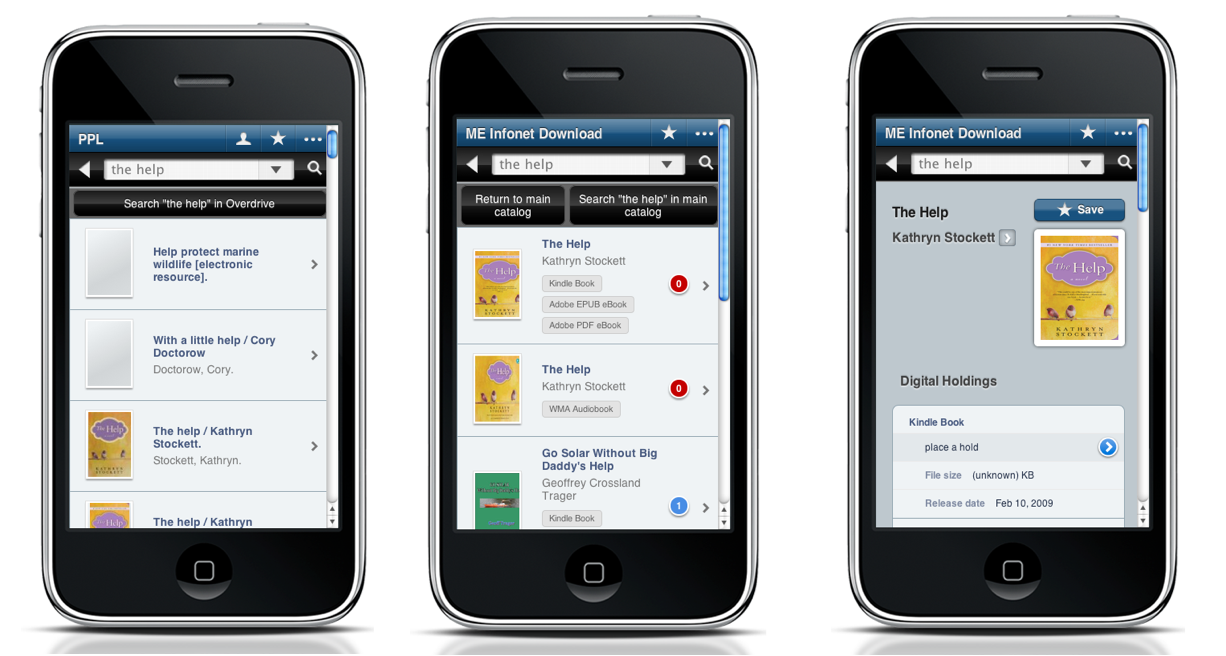
We’re pleased to announce that Library Anywhere, our mobile product, now has one-click access to OverDrive!

  • You can add a search OverDrive button to your Library Anywhere homepage. This doesn’t take you out to OverDrive mobile as a regular external link would, but runs the search within Library Anywhere—giving you search results and book detail pages.

It will pass you into OverDrive when you reach the point where you need to enter your account information to download the book, request it, etc.

  • You can also include a “do this search on OverDrive” link on the catalog’s search results page in Library Anywhere—so if you search “the help” in your regular catalog in Library Anywhere, it will ask you if you want to try that same search on OverDrive.
The screenshots above show:
1. Searching “the help” on Portland Public Library’s regular catalog. See the button that suggests preforming the search on OverDrive?
2. The same search done on the OverDrive catalog. Note that the search summary screen tells you which formats are available and number of available copies.
3. The full page for The Help in OverDrive, with links to place a hold, etc.

Want to see it live? Try a search on one of the following Library Anywhere libraries:

The goal is to tie the OverDrive catalog together with the regular OPAC in a more seamless way. This is a FREE upgrade, available to any Library Anywhere subscriber. As is always the case, any eBooks that already have records in your regular catalog already have working links out to the digital content—this is an addition to that.

If you’re interested in adding OverDrive to your existing Library Anywhere subscription, just email abby@librarything.com


About Library Anywhere
Library Anywhere is the mobile catalog and homepage for over 200 libraries and library systems worldwide. Browse for libraries using Library Anywhere by simply clicking the … menu within Library Anywhere and choose “Select a Library”. Read more about Library Anywhere here.

To order Library Anywhere, or get a free trial, call 877 340-2400, or email Peder.Christensen@bowker.com. You can also email questions to Abby@librarything.com.

Learn more: Attend a webinar
We do weekly webinars to show off both Library Anywhere and all the LibraryThing for Libraries enhancements for your library catalog (tags, similar books, other editions, series, awards, shelf browse, reviews, and Lexile measures)!

Webinars are scheduled for every Tuesday at either 10am or 2pm EST. Sign up for one today and I’ll tell you everything you ever wanted to know, and more, I promise. Click here to register. On the Browse Meetings page, search for LibraryThing to see a listing of all upcoming webinars.

Labels: ebooks, library anywhere, OverDrive

Friday, April 1st, 2011

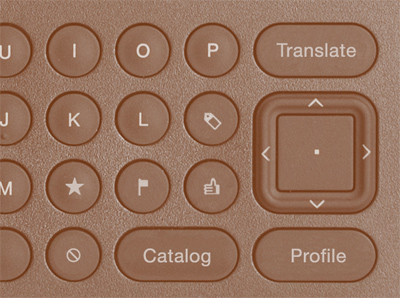
Introducing the LibraryThing-e, an ereader from LibraryThing

The LibraryThing-e offers easy access to all commonly-used LibraryThing functions.

After more than a year of development we are ready to unveil the “LibraryThing-e,” an ebook reader from LibraryThing. Built in a friendly and fruitful partnership with Amazon, the LibraryThing-e reader includes all your favorite LibraryThing features, and is a fully-functioning ereader designed from the ground up for hard-core bibliophiles.

Features include:

  • Read books on a high-contrast E Ink screen, good for reading in bright light or shade.
  • Download new books with built-in Wifi and 3G connections.
  • LibraryThing-e’s patented “LikeaBook®” casing feels like fine morocco leather and emits a faint “old book” smell.
  • Access Your books, Profile and Talk sections of the LibraryThing website, with special ereader-enhanced version of Tagwatch.
  • The LibraryThing-e reference collection includes special editions of the American Heritage Dictionary and the Anglo-American Cataloguing Rules, Second Edition.
  • Though a ground-breaking arrangement with most publishers, the LibraryThing-e comes pre-installed with up to 200 of your LibraryThing books already scanned in; HarperCollins titles are restricted to a 26-page sample.
  • Docks easily with the CueCat barcode scanner (included).
  • Import books from a variety of other devices, including the Nookmooch® and GoodReader® platforms.
  • Water-repellent.
  • Text-to-Speech option with a choice of voices, including American voices (“Tim” and “Abby”) and an Australian option (“John”). “Zoë” is available as an expansion.
  • Most books are available in more than 12 languages, including French, Dutch, Catalan and Latin.
  • Built-in geolocation and our Readar™ technology matches your library with that of other LibraryThing-e readers nearby. A special expanded “Unsuggester” feature tells you where your reading-nemesis is at all times.
  • Comes in two colors: “LibraryThing Brown” and “Original Greige.” “Abby Maroon” is backordered.
  • All features are optional.

Best of all, the LibraryThing-e will begin shipping in two weeks!

Labels: barcode scanners, barcode scanning, ebooks

Monday, January 24th, 2011

The downward spiral of ownership and value

This is one in a series of posts on the challenges of ebooks. Conversation about the topic is hosted by the Books in 2025 group. See the discussion topic there.


opinion by Tim

A recent blog post at Dear Author raised the issue of ebooks and ownership rights. Ebooks are redefining ownership toward access rights. New models are emerging, like advertisements in books. Jane concludes:

“I’m sure that there are other possibilities but with the amelioration of ownership and comparable media prices, digital books will come down from their current position and this, in turn, will create new business models and new pricing models. Could publishers resist the downward pressure of ebook pricing by coming up with a business model which would result in increased sense of ownership and thus value to the consumer? Is cloud access that model? What other ways could publishers and authors increase the value of ebooks to consumers?”

I suspect the answer is nothing. The loss of ownership creates a downward spiral in value, and erodes the very notion of paying for books at all.

Defining ownership down. We used to own our books. With most ebooks we own them in name, but effectively we lease them. As Jane documents, the slide toward more and more attenuated concepts of ownership continues.

The process is gradual. Mental models change slower than technology. If the Kindle had debuted with an access-based “faucet” model, it would have failed. Consumers would not have traded true ownership for a tethered, metered and monitored product. But we’ll get there soon enough, as each step away from ownership makes the next step more acceptable. Once you realize your Kindle book is not fully yours, you’ll accept it being mostly not yours. Google Ebooks are a further step away from ownership. Eventually you get to a faucet model, as music has done, either low-price (Netflix) or free (Pandora, YouTube).

By itself, such changes might be culturally and economically neutral. Ownership of paper books wasn’t so much a consumer preference as a side effect of their physical nature, and law followed and solemnized that state of affairs. Maybe the faucet model will produce more readers, more reading, more good books, more paid authors, etc. Or maybe it will produce less. Who knows?

The role of piracy. I think we know. And the trends are negative, for both readers and authors.

Unfortunately, digitization and the faucet model tends to encourage a third option–piracy. Digitization makes it possible, but the faucet model encourages it. This happens in two ways.

First, people who love autonomy and personal freedom rebel against metered and monitored access to reading. They don’t want inconvenient DRM, monstrous and opaque licenses, transfer limitations, constant access requirements or icky, opaque monitoring. These people will turn to piracy to avoid it. (Or at least that’s what they’ll say they’re doing.)

Second, the more ownership is devalued, the less people care about the rights of the seller. When someone sells you something they made, or through a small number of simple intermediaries, it’s easy to see what’s wrong about cheating them. When authors’ work is reduced to a limitless soup, available through shiny digital spigots at cheap, but limited, rates, it’s hard to see where problem with piracy really lies, and easier to rationalize cheating authors.

As devalued ownership feeds piracy, rising piracy in turn devalues ownership. Anyone with an internet connection can rapidly assemble a “library” of books it would have once taken years to build–so why bother building one?

As the logic churns, content sellers will increasingly seek other ways of “monetizing.” Authors will charge for readings, or merchandise. They’ll try advertisements. They’ll start leveraging all the user data they’re collecting to create even better ads. None of this will replace more than a fraction of the book economy, but they will definitely send a message to consumers: You’re being screwed enough to pay for the privilege.


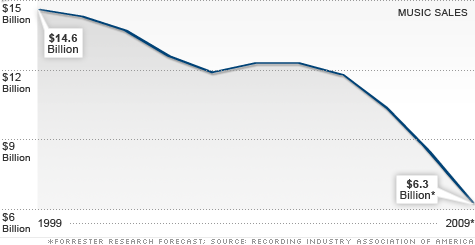
from “Music’s lost decade by David Goldman, CNN Money

Look elsewhere. Does impaired, devalued digital access encourage piracy? Many ebook pundits dismiss ebook piracy. “New models” will emerge. Piracy is better than obscurity. People will pay once everything is available for a “fair” price. The arguments are familiar, and have an air of ritual now. Hip conferences urge publishers to do a swan dive into an empty swimming pool.

Don’t need to take my word for it. Just look at all the other industries that have gone digital. Take music. Physical music sales have been declining steadily for more than a decade, and while digital sales rise, they make up only a fraction of the loss. (They’re not even rising much anymore either.) Revenue from Pandora, Spotify, YouTube ads and the like are loose change next to CD sales declines.

What’s the shortfall? All told, the United States recorded music industry is worth less than half of what it was a decade ago, and the downward slope is only getting steeper. Outside of the big markets, the declines are greater. The Spanish music industry fell 55% in the last five years alone. In China rampant CD copying and file sharing have left a nation of 1.3 billion people with a $75 million recorded-music industry. As a recent Economist report put it, the “worst-case scenario has already come to pass.”

Music has it easy compared to writing. Musicians have always relied on other revenue sources. Performance is the big one, but merchandise and licensing matter too. Authors don’t have the same options. Dickens engineered a profitable reading tour of the United States, as new-model enthusiasts always point out. But how many authors could do that today? How many could fund themselves on t-shirt sales. And will anyone pay authors to read sentences from their novels over an Audi advertisement? The ringtone market holds limited prospects.

The unashamed future. As William Gibson said, “The future is already here; it’s just not very evenly distributed.” I saw that future at a recent technology conference, hosted by NYU. Of course, the participants were all well down the digital road. All read digital books, and many had given up paper entirely. (In certain circles announcing that you haven’t read a physical book in X months is a boast, and people compete to have the highest number.)

But one individual stood out. In a mixed crowd of peers and professors this brave futurist shared her decision to stop buying book altogether. She loved books. She read a lot. But she could find everything she wanted to read on BitTorrent. Nobody objected. It may have been my imagination, but I thought I saw a mystical crown settle squarely on her head. She was the coolest person in the room. She was the future.

Publishers and authors, meet that future. And know that with every move away from ownership you are hastening its arrival.

Labels: ebooks

Tuesday, November 16th, 2010

New group: “Books in 2025—The Future of the Book World”

I’ve started a new discussion group LibraryThing Group, Books in 2025.

The group aims to centralize and restart a site-wide conversation about the future of books and reading. It’s a conversation that’s been going on for years here and there on Talk, especially Book talk and the librarians group, in comments to my Thingology posts about ebooks and my Twitter stream. It needs it’s own group. It will also be refreshing to hear more from LibraryThing members–not technologists or industry people. After all, who better to discuss the future of books than the people who love them most?

Anything about the future of books is welcome, but the focus will be on how ebooks and social reading are and will change things, with 15 years as a proposed timeframe:

  • How will ebooks change reading? Has it changed your reading?
  • How fast will ebooks rise, and how high will they go? Is the paper book dead?
  • Where is social reading going? What’s core and what’s fad?
  • Will sites like LibraryThing continue to exist, or will ereaders leverage their advantages to make book discussion a platform-dependent activity?
  • Will libraries contract or prosper in an ebook world? What can they do to make sure things turn out right?
  • How will ebooks change the world for publishers?
  • Will writers see increased opportunities–or be decimated by piracy? How will ebooks change literature?
  • Are physical bookstores doomed?
  • What about the rest of the book world–small and informal libraries, agents, rare books, small presses, book reviewers, etc.?
  • Amazon, B&N, Apple… How many will win, and how will they evolve?

Anyone can post, and start a topic. But we’re going to keep this a LibraryThing project. We’ll be starting some topics ourselves, and bringing in authors and other book people to discuss what they know, and where they think things are going.

So, come check out the group “Books in 2025,” and participate in a first topic, “Welcome to this group / Books in 2025?


Group image by Javier Candeira, released under CC-Attribution-ShareAlike 2.0 Generic (see on Flickr).

Labels: books, bookstores, ebooks, libraries

Sunday, November 7th, 2010

Library Friendly…

This publisher has pledged to support eBook lending for libraries.
(Find out more.)

The idea arose from an email I wrote on Web4Lib, which argued the rather dismal economics of ebooks in libraries, and noted that if “advocacy” was going to get anywhere it had better happen soon. After all, the ebook market is already about twice the size of the library market.

Anyway, my one constructive suggestion was to start the public campaign, to get publishers to commit publicly to a slate of lending rights for libraries.

To assist that effort, libraries (ALA?) should establish a “Good Housekeeping”- or “Organic”-style sticker that authors and publishers can slap on their books and webpages. By doing this they would get something in return for continuing First-Sale-style rights when they sell ebooks to libraries. They’d get a halo, a way for libraries to know what ebooks to buy and what publishers to support, and a way for regular readers to show their love for libraries in an ebook age.

Anyway, an idea. Lots to work out, of course.

Labels: ebooks

Monday, November 1st, 2010

Feedback loops in eBook success

“How big will ebooks get?” A lot hangs on that question. Right now ebooks represent perhaps 7% of the total book market. A world where they rise to 20% or 25% and stop rising differs substantially from one where they rise to 50%, 70% or 90%.

Without arguing the point, I see a 20% market as one in which bookstores continue to survive in significant numbers, publishers continue to have an important role in the book world, and public libraries mostly carry on as usual. At some higher level I see most bookstores vanish, non-academic publishers largely disintermediated away, and public libraries in crisis. (For libraries see my posts on ebooks in libraries.)

Feedback loops. My contention is that ebooks rise far above 20%, becoming the dominant book format, because the logic of ebook success has built-in feedback loops. You can call it “success breeds success” or “vicious cycles” as you like. Same idea.

I’ve never seen someone lay out ebook feedback loops in detail, and I’ve recently run many people who seem to think ebooks will “stall out,” so here’s my attempt at articulating the logic as I see it:

  1. Ebooks win on convenience above all; you can download something and start reading it immediately. Bookstores win on browsing and socializing. As ebooks cannibalize print sales, booksellers will go out of business, making paper books increasingly hard to find, and therefore less convenient, harder to browse and less socially rewarding (see also 7). Ebooks kill bookstores and dead bookstores drive ebooks–a classic feedback loop.
     
  2. Paper books depend upon economies of scale. As you print and distribute more books the cost per book goes down rapidly. The physical-book industry depends upon these economies. But when scale shrinks, everything runs in reverse. As ebooks take off paper-book costs will rise, making them relatively more expensive (3), and others will become unprofitable, eliminating the choice altogether (4).
     
  3. Ebooks are already cheaper than printed books, and bound to get cheaper still. If popular print books are cheap because the marginal costs are low, digital books have no marginal costs. They’re not free to produce; even apart from money to the author and publisher there is a substantial cost associated with preparing the digital file. That cost is “baked into” the ebook price. But it’s a fixed price, divided over the total number of copies sold. As volume increases that price will be spread out further.
     
  4. As books drop out of print, ereaders become a necessity. Ereaders today are a choice. Some prefer them, but nobody needs one. As books drop out of paper, ereaders will become necessary for people who don’t want to be constrained in their purchases. This will drive device adoption and therefore ebook purchases (5).
     
  5. As ereaders proliferate, ereading does too. eBooks suffer from a relatively high initial cost, but ebooks are generally cheaper. Once a consumer gets over that cost and has an ereader all subsequent book-buying decisions are influenced by that sunk cost.
     
  6. Ereaders become more powerful as you buy more books. First, on a personal level, there is a big difference between a device that has a few books you bought since Christmas and a device that has everything you’ve read since high-school–all in in one place and searchable. Right now most ebook people people have the former. Soon they will have the latter.
     
  7. Second, we will soon discover that ereaders are a networked good, like the telephone or the internet. As more people use them, they become better. Ebook “sharing” features are intentionally crippled, but they gain in value as more of your friends and family have the devices. The same applies to the possibilities for “social reading.” We have only begun to explore this, but, as LibraryThing and its immitators have shown, social reading shows great promise. It will be even more valuable when fully integrated into the book.
     
  8. As ebooks take off, we will figure out what they’re good for. Five hundred years of development have shown us what paper books are good for, but we’re still learning about ebooks. As ebooks become a larger share of the book market ebook-only advances will become worth pursuing. “Enhanced Ebooks,” like The Elements, will be part of the answer. But I suspect the real gain will come in genres that didn’t work as well in print. Nothing about short stories or poems requires they be bound together into anthologies or sold in tiny and expensive editions. The economics of print did that. Ebooks will change the market logic, and then change expectations. I don’t see someone accustomed to buying short stories on their Kindle reverting to the print-book model of buying anthologies.
     
  9. Right now–and I believe for a long time–ebook success accrues to a small number of companies, with Amazon in the lead. Concentrated power of this sort is bad news for publishers struggling to retain high ebook prices. Last year, MacMillan could afford to lose all Amazon sales for a time in order to put presure on Amazon’s pricing model. As eBooks rise, Amazon’s share of the book market will only increase. This would be true of ebooks even if the death of physical bookstores didn’t give Amazon a larger and larger share of physical book sales. A rising share is not going to make it easy for publishers to keep pricing power, and thus delay ebook adoption.
     

Any I’ve missed?

Labels: ebooks

Friday, July 30th, 2010

The magical $0.50: Why ebook economics don’t work in libraries.

ebooks in libraries

A publisher counts its library ebook money.

Ebooks are hot, and libraries are noticing.

The public library conversation about ebooks is also heating up. Unfortunately, much of the conversation ignores a critical factor that makes ebook lending problemmatic. That factor is not luddism, but the simple fact that, for libraries, ebook economics doesn’t make sense.*

The $0.50 Circ. I’ve written on this topic in the past. My contribution today was for me to spend some time trying to figure out what it costs to take out a paper book from a public library. What, in other words, is the cost per circulation?

I did some quick work at the Institue of Museum and Library Services’ Library Statistics, which collects statistics from some 9,000 public libraries, and presents them in a simple, searchable interfact.

The data is pretty sparse, but it does include two critical data points: Total Collection Expenditures and Total Circulation. From these you can derive a third statistic, Cost per circulation.

For example, if the South Portland Public Library spends $78,038 per year on materials, and those materials are taken out 249,431 times, we can see deduce that the cost per circulation was $0.31.

All told, I surveyed 25 libraries, running down town names—eg., Portland, ME ($0.54), Portland, OR ($0.29), Portland, CT ($0.51), Portland, IN ($0.31)—as well as including a few big systems—eg., Dallas, TX ($0.48), Charlotte Mecklenberg ($0.50). You can see my spreadsheet here.

The average of all comes out at $0.50. I don’t think a much larger survey would change that by more than a dime in either direction.** (If you want to run the full numbers, and have a copy of Microsoft Access, ILMS has the data files.)

Unfortunately, this doesn’t get us all the way to a book circulation number. But it gets us close. Print circulation still makes up the majority of circulation transactions. And books are not the most expensive materials libraries circulate. So whatever the number, it’s near $0.50.

Come and get your half-buck! Cost-per-circulation is a critical number because it shows how much libraries are spending to satisfy their patron’s reading needs–ignoring staff, building, etc. If the switch to ebooks causes that number to rise, we can expect library budgets to rise as well. If it rises a lot, library budgets will rise a lot.

Unfortunately, to keep library budgets the same, ebook sellers will need to accept $0.50 for each library loan. That’s not just the publisher’s money. The same $0.50 must compensate the publisher, the author and the ebook seller—all of whose costs were figured into the previous $0.50 calculations. (You can perhaps begin to understand why publishers and authors have never liked libraries, although few will say it openly.)

This princely $0.50 is compared to what ebooks go for, on average, in the consumer market. Of course nobody knows the answer there, but Amazon has tried to get everyone to adopt a $9.99 price point for popular titles and the average must be on this order. So, in order to keep library budgets in line, ebook sellers will have to be willing to accept 1/20 of the revenue they could get from the consumer market.*** Even assuming some library buyers buy less than they would have loaned, that’s a daunting ratio.

The magic is over. Will ebook sellers accept the $0.50 deal? Of course not. To think optimistically in the face of such numbers is to avoid the problem. Publishers, authors and ebook sellers aren’t stupid.****

Libraries at least are smart. Libraries are so great because aggregated lending is a wonderfully efficient thing, wringing high value from low cost. By buying books for the whole community, and making them generally available, libraries managed to reduced the cost of reading to a paltry half-dollar, far less than a paper book ever cost. That was a magical time.

With ebooks, that time may be over.


Reply to “How is this in anyway different from the case with pbooks? Hardbacks normally retail well over $9.99, yet library shelves are filled with them. Somehow the publishers manage to survive with this.”

The difference is that publishers have never been able to stop lending–by libraries or anyone else. Like reselling, giving and inheriting, lending is a basic right we have so long as its not taken away. The only way to take it away is through a law (as applies to software rental) or a contract. Publishers actually did try posting notices inside books, preventing resale (see Bobbs-Merrill Co. v. Straus), but it was stopped. A real contract requires both sides to explicitly agree, and notices like that were ruled not to constitute a contract. In theory, bookstores could start requiring real contractings, only selling you a book on the condition you didn’t sell or lend it to someone else. Obviously, this would outrage people, so it’s never been tried.

eBooks make theory a reality. All the ebook licenses constrain gifting, reselling and lending, and most prohibit it entirely. The media change has largely obscured the shift. People know they can’t lend software, and indeed it makes a certain amount of sense. Digital goods are so frictionless an unlimited ability to lend, even constrained by a one-at-a-time rule, would quickly give rise to a massive lending clearinghouse, and a publisher would only sell as many copies of a book as were being read simultaneously at its peak.

As far as surviving, my post made no claims whatsoever about surviving. Publishing has always known that lending and resale cut into revenue, just as people who make snow blowers know that, if nobody could lend or sell a snowblower, more people would buy them. In the world of physical sale, lending and reselling are normal and, ultimately, built into the prices we pay. Just as snowblower manufacturers don’t go under even though my wife and I exclusively borrow our neighbors’, Publishers don’t either.


* This post only deals with public libraries. The issues are different for an academic library. Academic publishers have a much smaller “consumer” market, and academic libraries have much high cost-per-circulation. I suspect that academic libraries will transition to ebooks more easily.

** Obviously, real circulation involves books bought in previous years, but assuming neither number swings wildly around, you can estimate the cost per circulation very well from the collection expenditures and total circulation.

*** The only escape is in the notion that libraries don’t canibalize consumer sales. There’s certainly some effect there. If everyone had to buy their books, some people wouldn’t buy as many books as they used to take out for free at the library. But is this effect sufficient to overturn a 20-to-1 pricing disparity?

**** We have, of course, completely ignored the cost of the devices themselves. If libraries also lend the devices, their costs will go up still further.

The conventional rejoinder here, after calling me a luddite, is to argue that publishers are already willing to let Overdrive lend out some ebook titles in libraries. I contend that they were willing to experiment with it, especially considering how limited Overdrive is as a platform, and that in any case, when you add up all the fixed and variable costs, and divide by actual usage, Overdrive is actually quite expensive. It’s also worth noting that a recent COSLA report on ebooks noticed Overdrive is now refusing larger agreements, speculating:

“OverDrive won’t sell to the LYRASIS consortium and has begun to balk at statewide purchasing groups. Maybe this is for the comfort of nervous publishers who view ebooks as frictionless, ripe for piracy, or long-term profit losses as library products”

Labels: ebooks

Friday, April 23rd, 2010

The Brigadoon Library!

Techcrunch just reported an interesting development with Barnes and Noble’s Nook eReader, a feature called “Read in Store.”

The idea is simple. If you’ve got a Nook and you’re in a physical Barnes and Noble store, you can read any ebook they carry. When you leave the store, the book goes away. As TechCrunch writes, “It’s the Brigadoon of ebook reading.” (allusion explanation)

There are limitations, of course. Just as the Nook’s “lending” feature only works once per book, and then never again, Read in Store is only good for an hour of book reading per day, plus another 20 minutes for magazine and newspaper content.

Retail sense. It certainly makes retail sense. There was always something risky about the Nook. Was Barnes and Noble preparing for a future without stores or just speeding its own demise? Many ereader owners give up on physical bookstores.(1) Read in Store is designed to keep them there. As the press release puts it, “Our digital customers will feel at home in our stores” where they can read books on their Nook while “enjoying their favorite beverage in our café.”(2)

Best of all, this is territory Amazon and Apple can’t follow. Amazon has no stores, and will never add them. (As Indie Booksellers never tire of pointing out, Amazon’s success depends in part upon avoiding sales tax, which requires having no physical presence in a state.) Amazon has stores, but they’re not exactly set up for reading.

If I were Apple, I’d be talking to Borders right now. If I were Apple, there was no disease, and animals didn’t eat each other, I’d be talking to independent booksellers. Maybe it’s time indies got together, presumably through IndieBound, and tried to wring a similar deal with someone–Kobo, Sony, or the congruently social Copia.

An answer for libraries? What works for Barnes and Noble could also work for libraries. Indeed, since every Barnes and Noble has suddenly turned into a limitless library, real libraries risk losing a core value to a mere bookstore.

Fortunately, the change to a “Brigadoon Library” would be gentle. Libraries are already accustomed to in-library database access. This would be an extension of an established concept–very helpful in selling new ideas to institutions that are too often hostile to them. And it should be easy to set up–just submit your wifi’s IP address to an ereader’s website and you’re good to go.

Best of all, this is a library solution that makes sense to publishers and could therefore actually happen.(4) Publishers signed on with Barnes and Noble because they calculated that the sales they lost from free reading would be more than offset by the sales they gained from people who bought the book after tiring of the physical limitation–and by the extra word of mouth.(5) With libraries, the publisher incentive is less, but still significant. Readers cannot turn from an ereader to buy a physical copy, as they could at a Barnes and Noble store. But, as at a store, they can buy the ebook. There’s no reason publishers wouldn’t provide such a service for free, or, more probably, a low cost.(6)

What about outside the library? Will many in libraryland object to “read in the library for free but pay to take it home”? Certainly. But here’s where ebook rental comes in. The library will pay to have some books available for take-home rental.

As I’ve pointed out in the past, ebook rental is a serious down-elevator for libraries. Through the magic of the First Sale doctrine, libraries could extract a lot more value from paper books than “regular” buyers–something like nine times as much. This surplus value was to a large degree why libraries came about, and why they continue to make economic sense. But now that publishers aren’t bound by First Sale, they have no incentive whatsoever to allow libraries similarly generous terms. Libraries will have to pay full price for the value they deliver. Once that happens libraries will have little advantage over renting the book yourself.(7) Libraries become a “simple” book subsidy, not a magical one.

I don’t see this regime ending. Publishers will never allow libraries to circulate digital books under the older, physical terms. They will charge for it, and charge what it’s worth.(8) But in-library reading can augment necessarily restricted and circumscribed ebook lending. Thus, the library itself–the physical library–can serve as a limitless portal to the world. And, in addition, the library can allow paper books, and some digital books to be taken out.

Library dystopia. The Brigadoon Library holds out some hope that libraries can avoid “library dystopia”–a world in which the loss of First-Sale value and the virtualization of everything undermines public support for the library, and for the other enduring values libraries deliver. It’s a world without libraries, or a world with libraries that provide much less.

For me, these enduring values include helping patrons find and understand information, and providing a vibrant community space. Many would also include the provision of free computers, but I see this as a downward race against technology prices–a service that will disappear as the need disappears, much like the telephone service libraries in rural areas once provided.(9)

Instead of a library depleted of books–not to mention CDs and DVDs(10)–and of library patrons not there for babysitting or free computers, the Brigadoon Library would be a full library. It would be full of patrons browsing the entire world of books.

Library utopia? This isn’t library utopia. The Brigadoon Library would be a sort of updated closed-stacks library, and closed stacks library are limited libraries. It isn’t the universal library, the expected future library where everything is available everywhere–and for free.

I didn’t get a shot of the reading room, but here’s my son, with the lions. No libraries, no lions. For God’s sake, think of the children!

But it’s a healthy one. It’s healthy for authors and publishers. It’s healthy for library budgets. And it’s healthy for patrons.

I got a sense of how healthy a closed-stacks library can be a recent trip to the Boston Public Library’s Research Library–the beautiful old building next to the ugly modern one. The reading room was full of people studying and browsing the web, but a core group was there because the “Research Collections” at the Boston Public Library are only available for use in-library. Kept from going elsewhere, they were truly limited.

But the limits had their benefits. Researchers and non-researchers enjoyed the air conditioning, the gorgeous room, and the company of others. The building and the people added something. And that’s not even mentioning all the restaurants and bookstores nearby, or the library-sponsored readings and music events. The “anywhere library” of solitary individuals in their underwear is not really a better library.

I’ll stop there. My blog posts all way to be essays, and my readers prefer they were Twitter posts.

To recap the Brigadoon Library is:

  • Technically easy, so doable.
  • Good for publishers, so possible.
  • Great for patrons, who get access to a world of books.
  • Not expensive.
  • Likely to produce full, vibrant physical spaces.
  • Likely to foster the connection between taxpayer and library.
  • Might save libraries.
  • Named after a Broadway Musical.

Come talk about it in the comments, or on Talk here.


1. Those that don’t often use them very cynically–soaking up the nice displays and friendly smiles of the booksellers without the least intention to buy. There is, I think, a special circle of hell for people who do this, alongside the people who browse stores in order to figure out what they’re going to buy on Amazon.

2. Does any human being not standing in front of a table with a pad of paper uses the word “beverage”?

3. In some cases, libraries would probably have to pay outright for a read-in-library feature. Few patrons are going to buy an encyclopedia, for example. But the payment would be minimized by the limitation.

4. Here and elsewhere I’m going to use “publisher” to mean whoever sells the book. “Publisher” may eventually mean author directly, or some intermediary with no editorial or curatorial role. I despise phrases like “content provider.”

5. This ignores the likelihood that publishers were also influenced by Barnes and Noble’s outside share of their own book sales.

6. In some cases, libraries would probably have to pay outright for a read-in-library feature. Few patrons are going to buy an encyclopedia, for example. But the payment would be minimized if the item could only be read while in the library.

7. The exception is market power and price discrimination. Libraries buy a lot of books, so they may be able to command moderate discounts. As for price discrimination, it only applies if you need to go to the library to get the book. Price discrimination works by targeting some type of consumer or by imposing some barrier that does the same; for example, paperbacks are price discrimination, big fans and people with money buy the hardback; lesser fans and the cost-conscious wait to buy the paperback.

8. The only real hope is legislation. If Congress passed a bill that forced publishers to sell to libraries at a certain cost, with certain rights, that would change everything. I don’t see that happening, and if it did, the costs and rights would be closer to real value extracted than to the First Sale price.

9. That doesn’t mean libraries will stop providing computers, just as many will still let you make a phone call. Computers may well be necessary for this or that library-related task. And since libraries will probably continue to be used for low-quality babysitting, computers will keep the children entertained. But the provision of free computers and internet cannot remain a core mission of libraries when the “free” part has become superfluous.

10. CDs and DVDs are going virtual much faster than books. And for all the interest in libraries providing ebook rental nobody is talking about libraries providing free music of video streaming. That will never happen.

Nook photo credit goes to jennifertomaloff on Flickr.

Labels: brigadoon library, ebooks, ereaders, future of the book, kindle, nook

Friday, April 9th, 2010

Reading alone: How ebooks will kill the smallest libraries

A shelf at a church library catalogued by LibraryThing members. (See other flash-mob cataloging events.)

I’ve argued before (1, 2) that ebooks will hurt or even kill traditional libraries. I’d like to present the even stronger case that ebooks will kill off the small “community” libraries all around us–the shelves and rooms at churches, health centers and many other similar places.

These little, informal lending libraries grow like weeds all around us and contribute to the fabric of social life and community identity. It will be a shame to lose them, but it is probably inevitable.

Ebooks hurt traditional libraries. In brief, the argument is that paper-book libraries made economic sense because libraries owned books like anyone else, but could efficiently organize them to be lent out many times.

This “First Sale Doctrine” falls before the licensed-usage model of contemporary ebooks. It’s not in publishers’ or writers’ interests to allow libraries to buy an item once at a consumer or near-consumer price and lend it out to many people, even serially, forever. Libraries will be forced to pay something closer to the true value of their lending activity, which will cost much more. It will convert libraries from an almost magical value multiplier, into a “simple” book subsidy.

Why are they dead? Ebooks kill small community libraries for the same basic reason—ebooks are and will remain a licensed good, not a freely owned one. The smallest libraries rely on the rights implicit in physical ownership. eBooks change—take back—many of those rights.

This boils down a little differently:
  • Small libraries depend to a large degree on cast-offs and donations. But consumers can’t give their ebooks to anyone when they’re done with them. They’re technically and/or legally locked to a device or personal account.
  • Small collections grow organically and lazily without a “librarian.” It’s unlikely they will be able to negotiate and organize whatever “institutional subscriptions” will be available for public libraries.
  • If community libraries often can’t pay for new paper books, it’s unlikely they will have the funds to engage in high-priced site- or multi-use licensing of books.
  • Public libraries have market power. Even if they can’t preserve first-sale value, they can use their collective and even individual scale to negotiate deals. Small community libraries are too fragmented and casual for market power.
  • Public libraries are connected to real moral and political power, and it pays dividends. For example, although public libraries weren’t even involved in the infamous Google deal, the parties thought it politic to grant public libraries free access to copyrighted books at one terminal per building. This power may come in handy if publishers put the squeeze on them, but the smallest community have neither market or political power.

Counter-arguments. The argument could be made that ebooks will eventually revert to a more traditional “ownership” model. But why? Consumers have already made it clear that they will trade convenience and price to give up traditional rights of resale, lending, donation and inheritance. There has been no large-scale clamor for such rights, and I don’t see one emerging. Rather, as ebooks advance, the personal, non-transferable nature of the medium will become increasingly accepted.

It has also been suggested that, although ebook DRM and contracts will stiffle lending, rampant piracy can function as a sort of rough substitute. If ebook piracy reaches music-piracy levels, this may come about–together with a sharp decline in quality writing which, unlike music, can’t fall back on concert tickets and t-shirts to make ends meet. But either way, small communities will not be involved. Private citizens may trade ebooks, but a church or a senior center will not put its legal neck on the line to engage in a secondary activity like book lending.

What will we lose? At lot more than you might think, particularly if you’re healthy, young and not much of a joiner. But here’s a partial inventory of some the small lending libraries within a mile of two of my home:

  • A dozen churches, some with significant libraries
  • Two synagogues
  • A muslim community center
  • A natural birthing and parenting center
  • An Irish heritage center
  • A handful of exclusive private clubs
  • A Masonic temple
  • An arts and theatre center
  • A welter of general health centers
  • A cancer center
  • A center for grieving children
  • A hospice
  • A homeless shelter
  • A left-wing political action center
  • An advocacy group for Maine children
  • A center for transgender youth
  • A fiber-arts group
  • An Audubon Society
  • The YMCA
  • Semi-ornamental collections in a legion of coffee shops, hotels, restaurants, bars and so forth
  • Two “Bookcrossing zones,” where strangers leave and grab used books
  • A tiny, poor, seldom-open private library that’s been around since 1815 but mostly stocks recent bestsellers

Gloom and Doom? There is another side, of course. We shouldn’t forget that ebooks may well turn out to be an overall boon. Convenience, universal selection and writer-reader disintermediation are powerful, largely positive forces.

It may also turn out that, all things being equal, the “ownership premium”—the extra that books cost because they could be transferred to others—was an unnecessary drag on our lives. If we aren’t paying for true ownership, we can perhaps rent—and read—more. Maybe with books, as with tuxedos, most people are better off renting.(1) Or, to take another example, where we once dug wells, and “owned our own water supply,” we eventually found it was more efficient to socialize the cost of the infrastructure, and pay for usage.

I even expect we don’t even know all the good things ebooks will bring about. I’m not even being sarcastic.

But if something is gained, something will definitely be lost. The list of ebook “externalities” is long: the death of physical bookstores, the wounding or death of traditional public libraries, the concentration of retail power in a few hands, surrendering your reading history to corporations, privacy and censorship issues in undemocratic states, leaving your books to your kids, lending books to friends, showing off, subway voyeurism, etc.

So, to that list, add the death of the smallest libraries.


1. I own my own tuxedo, however, and I wear it whenever I can, dammit.

Labels: ebooks, future of the book, small libraries

Friday, February 5th, 2010

Why are you for killing libraries?

Publishing idea-man Mike Shatzkin recently wrote a provocative blog post, “Why are you for killing bookstores?

He lays out the uncomfortable facts:

“Although there are probably few people reading this blog who expect bookstores to be around in 15 or 20 years (and those who do will undoubtedly leave a comment!), there are many who would like to keep them around as long as possible. There is a magic to being in a building surrounded by 40,000, 60,000, 100,000 different books. Bookstores are inherently community centers. They make possible the wide dissemination and promotion of great writing. They enable people to see heavily-illustrated books before they purchase them.

But have you thought about this? If you are for bookstores lasting as long as possible, you want to slow down the uptake of ebooks.”

He goes on to explain the broad dynamics of the situation—the way Amazon, the big physical retailers and publishing look at the future, and which side they’re on—faster ebooks or not. It’s a stimulating read. And a depressing one.

Particularly depressing for me is the fact that Shatzkin never mentions libraries. (As one commenter on his post wrote, “Those buildings with 1000s of books that you speak so fondly of are called libraries.”) It’s not his fault, really. It’s a short blog post. But I think it shows the extent of the problem for libraries. When a top industry analyst looks at the book world, libraries don’t figure very prominently. There is a war going on, and libraries are going to be collateral damage.

They don’t deserve it. US libraries circulated some 2.1 billion books last year, compared to 3.1 billion books sold. But they don’t have much of a profile in the commercial world.(1) Being responsible for something like 39% of reading, bookstores only are about 4% of book sales.(2)

The difference is, of course, that libraries don’t pay every time they circulate a book. Under the First Sale doctrine—the idea that you, well, own the things you own—libraries can pay once, and lend a book out multiple times.

Ebooks change this. As ebooks advance, libraries are going to lose their “First Sale” advantage. Publishers will never allow a library to “own” an ebook absolutely, just as consumers don’t really own their ebooks. Libraries are going to be renting them, in fact or in effect, and they’re going to paying a lot more to do it. They’re going to be paying for the use they get out of them, not spending what consumers spend and getting more use. (I’ve written on the economics here before, so check that out first if you disagree with me.)

As the logic takes hold, libraries will be transformed into “simple” book-subsidy machines, not the special, advantaged ones they are now. That means they’re either be forced to subscribe to fewer books, invest a lot more in their holdings or, for public libraries, convince voters to give them a lot more money. Those are bad options.

Other factors exacerbate the problem. Libraries are losing the “aggregation advantage.” When every book is available anywhere, why go to the library to get it? And piracy hurts. Digitization has cut the music industry in half in the last decade, and there’s no reason to believe books will become the first digital medium to avoid it. When you can not only get a book anywhere, but get it for free, why go to the library?

There are some reasons. Unlike bookstores, of course, libraries do other solid, valuable things. They employ librarians, who help you find and understand things. They provide free internet access. They hold story times and author readings. They lend out other things, although, excepting tools and people, digitization is going to wipe those markets out too.(3) And they’re funded indirectly. Bookstores monetize their community value—whether it’s an author reading or just the value of meeting cool people—by selling valuable objects. They create more value than they can realize. Public libraries, by contrast, monetize through government taxation, which is to say by periodically asking voters if they value them. As of now, despite some budgetary cuts, voters mostly do.

But, overall, I think libraries are headed in the same direction as bookstores and in obedience to the same logic—falling in tandem with the rise of ebooks. If they survive, it’ll be for everything else they offer and so, for me at least, apart from the librarians, whose value won’t fall, ebook libraries won’t be full-fledged libraries anymore.

Shatzkin concludes:

“I don’t think anybody would want to be accused of being in favor of killing bookstores faster. And very few of us would be comfortable having it said we were trying to slow down the progress of digital technology, strategizing to slow down ebook uptake. But you are for one or the other, unless you don’t have any opinion at all.”

Isn’t the same thing true for libraries and ebooks?

Update 1: If you want to reply, you can leave a comment, but I also started a topic in Talk about the topic.


Well, that’s about the most depressing thing I’ve written. I hope I’m wrong. And I even have some hopeful, positive things to say too. But I’ll save them for another day.

1. These numbers are all very wiggly. Eric Hellman, formerly of OCLC, has been working on them for a while. Start with this, this and this.
2. As founder of LibraryThing, which doesn’t cede the term “library” to institution collections of books alone, I need to mention that “lending” isn’t just an institutional library phenomenon. Regular people lend and share books too, probably in numbers to rival libraries. That phenomenon will be largely ended by ebook DRM—and revived by piracy.
3. It’s actually digitization plus virtualization. CDs are digital, but they’re also physical objects, so libraries can own them for real. When CDs are gone—and they’re going—libraries will have to contract with digital music services. The dynamics are similar to the ebook dynamics.

Labels: ebooks

Wednesday, November 18th, 2009

Your statistics: Ebooks and audiobooks

Our recent ebook push had one major flaw—something was up with the profile statistics page.

That’s been fixed, and the result is stunning. Instead of a few dozen ebooks, most users should see hundreds. My stats, for example, include fifteen LibriVox ebook editions, 45 Project Gutenberg editions and fully 99 Open Library editions—all free.

Check it out:

Labels: audiobooks, ebooks, kindle, open library, statistics