This month’s State of the Thing, LibraryThing’s monthly newsletter of features, author interviews and various forms of bookish delight, should have made its way to your inbox by now. You can also read it online. It includes a reminder about SantaThing (signups continue through November 29, so head right over to the SantaThing page to join the fun!), as well as author interviews with Jon Ronson, Nancy Marie Brown, Jon Meacham, and Christopher Bonanos.
 I talked to Jon Ronson about his new book Lost at Sea: The Jon Ronson Mysteries, just out from Riverhead. Some excerpts:
For those who haven’t had a chance to read it yet, give us the nutshell version of Lost at Sea. What’s the thread that ties these twenty-two short pieces together?
These are funny, sad stories about people lost at sea, trying to make their way through the world. Sometimes they reach for crazy ideas to get them through, sometimes horrifying ideas, sometimes silly ideas, sometimes even inspiring ideas. I see this as an empathetic book about people spiraling out of control.
They sometimes feel like adventure stories. I get into some dangerous scrapes. Other times they feel like mystery stories: there are actual mysteries that need solving. Sometimes the mystery is, Why does this person believe this crazy stuff? Or, Why does this person act in this baffling way?
There’s a Christmas-themed town in Alaska where every day is Christmas and the kids have to be Santa’s elves. A bunch of them were recently arrested for being in the final stages of plotting a school shooting. There’s a real-life superhero who dresses in a supersuit of his making and breaks up gangs of armed crack dealers in the dead of night. I went along with him. It was terrifying. There’s a billionaire filtering her money into creating a robot version of her real-life partner that she’s convinced is about to burst into spontaneous life. I interviewed the robot. And so on.
How much follow-up do you do on your stories? Do you keep in touch with folks you’ve profiled? Once you’ve finished writing, do you move on to other projects?
I like to keep in touch—I’m never happier than when people from my stories appreciate how they’ve been portrayed. That doesn’t always happen. I’ve stayed in touch with maybe half the people in my books. Just today I corresponded with two of them: Phoenix Jones, the real-life superhero, and Mike Coriam, the father of Rebecca Coriam. Hers is the title story of the collection. Rebecca was a young woman who worked on the Disney Wonder, a cruise ship. She went missing on it one day—she just vanished. The Coriams have had no luck trying to find out what happened. They feel they’re hitting a brick wall. I went on a cruise on the ship to learn what I could.
If you could interview or profile one person you haven’t had the chance to talk to, who would it be? What would you want to ask?
Right now—and this is unusual for me, because I’m not so interested in writing about famous people—David Bowie. He seems to have retreated from the world. He’s barely been seen for six years. I would love to know why, and would like to ask him to reflect on his life.
Read the rest of our interview with Jon Ronson.
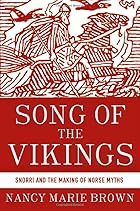 I also had the chance to talk with Nancy Marie Brown about her new book, Song of the Vikings: Snorri and the Making of Norse Myths (Palgrave Macillan). A few teasers:
What were some of your favorite books as a child?
The Hobbit and The Lord of the Rings by J.R.R. Tolkien are probably first on that list. I also loved C.S. Lewis’ The Chronicles of Narnia, T.H. White’s The Once and Future King, and Ursula K. LeGuin’s Earthsea Trilogy. I’ve had a very pretty edition of Tennyson’s poems since sixth grade—but I’m afraid I like it more for its fake leather binding and slipcase than because the poems resonate. In high school I discovered Sir Gawain and the Green Knight (probably in Tolkien’s translation), and that was my entry into studying medieval literature.
What’s your home library like? What sorts of books would we find on your shelves?
My whole house is a library—my husband, Charles Fergus, is also a writer—so it depends which floor you are on. The basement holds our general fiction, poetry, fantasy, and science fiction collections. In my husband’s office is mostly nature and science. Upstairs is the general nonfiction collection and a small collection of children’s books and young adult novels, which I’m studying to learn how to write one. My office is taken over by Icelandic literature (both modern and medieval, in English and Icelandic) and books about Scandinavia, Vikings, folklore, medieval literature and scholarship, and travel (mostly to Iceland and northern Europe).
Read the rest of our interview with Nancy Marie Brown.
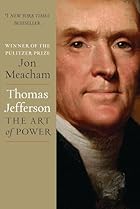 My third interview for November was with Jon Meacham, about his new biography Thomas Jefferson: The Art of Power, out this month from Random House.
As part of your research process, you spent a night in Jefferson’s bedroom at Monticello. Can you tell us about that experience? What insights did you gain from being there that helped you understand the man better?
I was struck by the play of light in his rooms. The sun strikes his chambers first, and he always woke at first light—a sign of his constant engagement with the
world, and of his endless energy.
You write in the Epilogue about Jefferson’s legacy, and about how he has, over time, “provided inspiration for radically different understandings of government and culture.” What is it about the Founders in general, and perhaps Jefferson in particular, which has lent itself to such wide-ranging interpretations? What do you see as some of the most common misconceptions of Jefferson’s philosophy or positions today?
Jefferson represents the best of us and the worst of us—our highest aspirations and our most disappointing failures. It’s easy, then, to find ourselves in a kind of
conversation with him as we look to the past for inspiration and for instruction. I think the most stubborn misconception about him is that he was solely a man of ideas. My view is that he was at once a philosopher and a political realist.
If you had the chance to interview Jefferson, but could only ask a single question, what would it be?
What is your greatest regret?
Read the rest of our interview with Jon Meacham.
 Last but not least, I was able to chat with Christopher Bonanos about his book Instant: The Story of Polaroid (Princeton Architectural Press).
How did this book come about? What first got you interested in the story of Polaroid?
I was always a Polaroid shooter, from my teenage years, when I got a secondhand camera. (A Model 900, from 1959, marked $5, bargained down to $3.) And when Polaroid film was discontinued for good in 2008, I wrote a little magazine story that led me to the story of the company’s rise and fall and rebirth, and Land and his extraordinary invention. You find a good story with an amazing central character, and if you’re a writer, you start to think “that’s a book.”
Tell us about your research process: what sources did you find most useful? What was the most surprising thing you learned?
Polaroid’s archive contains a few million documents and photos, and during the company’s bankruptcy, the whole pile went to Harvard Business School’s Baker Library. The person in charge of it, a librarian named Tim Mahoney, is going to spend his whole career on this one collection, it looks like, and the first tranche of it came open to researchers around the end of 2009. So in January 2010, I started logging a lot of time there. Also, the company’s museum collection (prototypes and such) went to the MIT Museum, where I also did quite a bit of digging. And then a lot of the extraordinarily smart people Land hired are still around, and I spoke to lots of them.
Surprising things I learned: Polaroid kept everything. EVERYTHING. In the company’s early days, Land had been involved in a patent dispute, and after that, each idea was disclosed, signed, witnessed, and dated. I’ll tell you, there’s nothing like those files when you’re trying to figure out how an invention got off the ground.
Another big surprise: Land made a point of hiring woman scientists, which was highly unusual back then. He was friends with an art-history professor at Smith College who would recommend his smartest students, and Land would scoop them up every year. A lot of them were, as you’d expect, art-history majors, and he’d send them off for some chemistry classes and build his own scientists that way. It was an end run around the usual pool of graduating talent, and it also made those women extremely loyal. A lot of them stayed at Polaroid for decades.
You’re something of a Polaroid enthusiast yourself, I understand? How long have you been using Polaroid cameras? Are you still using them today?
I started shooting as a kid, though that camera is no longer useful: it uses a film format that’s out of production. But I do carry another camera (Model 180, for the cultists) with me every day, and I try to shoot my son at least two or three times a week. I’ve been keeping an album since he was born, and I have to assume he’s one of the very last kids who will be documented that way. (I take plenty of digital photos of him, too, of course.)
Read the rest of our interview with Christopher Bonanos.
Catch up on previous State of the Thing newsletters.
If you don’t get State of the Thing, you can add it in your email preferences. You also have to have an email address listed.


 We are delighted to welcome Seth Ryder (LT member sryder) to the LibraryThing staff. Seth is our new systems administrator, and aside from all the usual system-administrator-type stuff, we threw him into the deep end last week by having him help us out with SantaThing ordering on his fourth day on the job!


 Publishers do things country-by-country. This month we have publishers who can send books to the US, Canada, the UK, Israel, and more. Make sure to check the flags by each book to see if it can be sent to your country.


